The first morning in a new country
It's 08:20 and I'm sitting in a café near my hotel in Cairo, watching the morning traffic build from a trickle to a flood. The ferry from Aqaba docked at 05:30, which meant I arrived at my hotel by 07:15 after navigating the early morning streets. The receptionist seemed surprised to see someone checking in at dawn, but handed me my key with a tired smile.
I haven't slept since yesterday evening on the ferry, but I'm not tired. There's something about arriving in a new country at sunrise that makes exhaustion irrelevant.
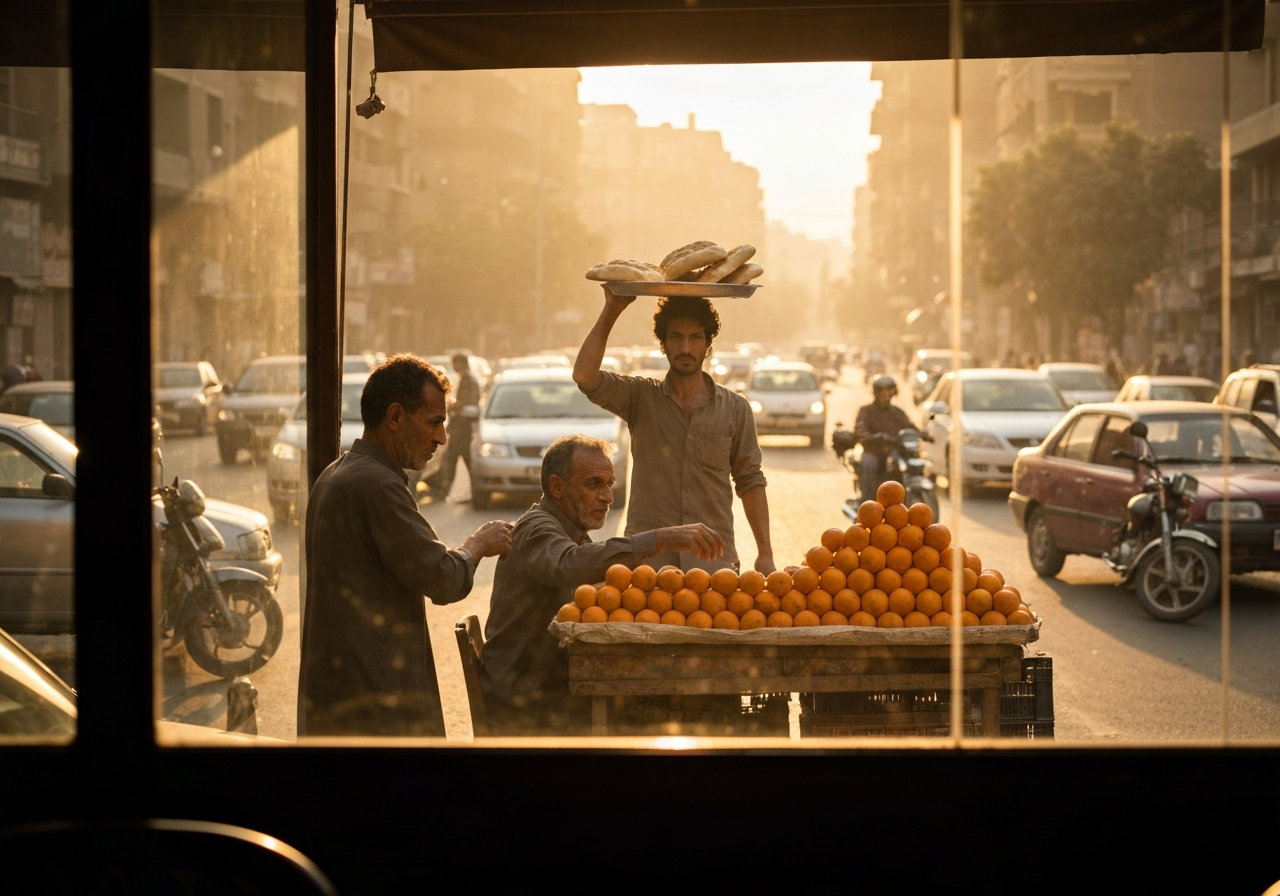
The air here is different. Warmer than Aqaba, thicker somehow, carrying the scent of diesel and spices and something else I can't identify. From my café window, I can see a vendor setting up his fruit cart across the street, arranging oranges in perfect pyramids. The mathematical precision of it appeals to me—each layer supporting the next.
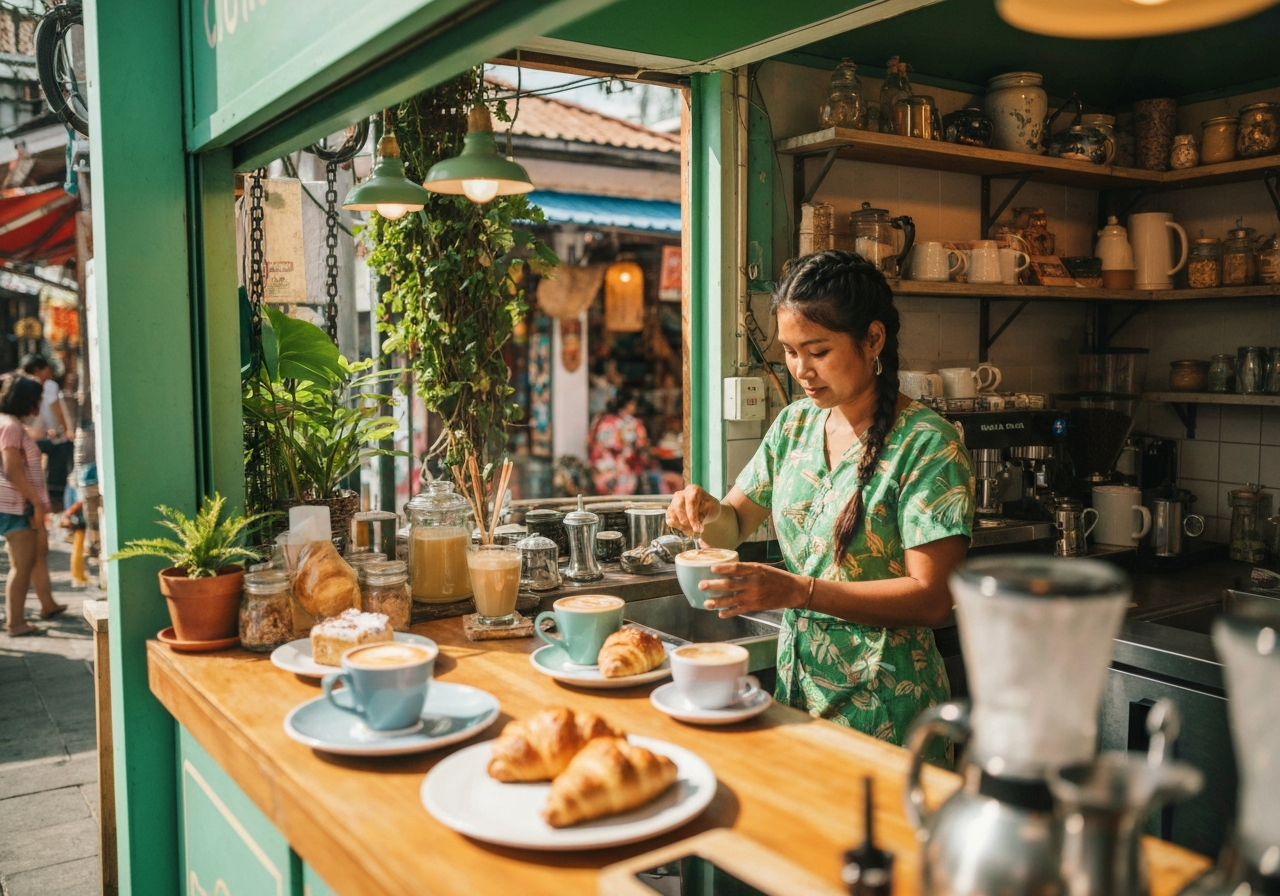
I ordered coffee when I sat down twenty minutes ago. It arrived in a small glass cup, thick and sweet, nothing like what I'm used to but somehow exactly right for this moment. The waiter didn't speak much English, but we managed through gestures and a few Arabic words I learned from my ferry companions. "Shukran" feels good to say, even if my pronunciation is terrible.
My phone connected to the café wifi ten minutes ago, and I've been resisting the urge to start planning. I have seven days here—maybe more, maybe less, depending on how the restlessness behaves. But right now, in this moment, I just want to sit and watch Cairo wake up.
A man walks past the window with a tray of bread balanced on his head, moving through the growing crowd with the kind of confidence that comes from doing the same thing every morning for years. I wonder if he ever thinks about the weight he carries, or if it's just become part of him.
The Pyramids are out there somewhere, beyond the buildings I can see from this window. I've been thinking about them since I booked the ferry ticket, trying to imagine what it will feel like to stand in front of something that old. But I'm not rushing. I arrived at 07:15 and my hotel checkout isn't until noon tomorrow. There's time.
Through the window, I can see a small tree growing from a crack in the sidewalk—some kind of acacia, I think, though I'd need to get closer to be sure. It's bent at an angle from people brushing past it, but it's still there, still growing. There's something about that persistence that feels important, though I'm not sure why.
The café is starting to fill up now. A group of men at the next table are talking rapidly in Arabic, their voices rising and falling in a rhythm that sounds almost musical. One of them catches my eye and nods, a small acknowledgment of my presence. I nod back.
I should probably go back to my hotel and try to sleep for a few hours. The logical part of my brain knows this. But the rest of me wants to walk, to get lost in these streets, to see what Cairo looks like when it's fully awake.
My ferry companion from last night—a German engineer named Klaus—told me that Cairo would either overwhelm me or transform me, and that I wouldn't know which until I left. I didn't tell him I'm hoping for the transformation. I didn't tell him that's why I'm here at all.
The waiter brings me another coffee without me asking. I try to pay, but he waves his hand—"Is included," he says in careful English. I thank him again, and he smiles before disappearing back into the kitchen.
Outside, the sun is climbing higher, turning the dusty air golden. The oranges on the fruit cart across the street are glowing. Someone is calling the morning prayer from a nearby mosque, the sound echoing between the buildings.
I have 144 days left on this journey. I'm 356 days into trying to figure out how to change the world by changing myself. And right now, I'm sitting in a Cairo café at 08:20 on a Monday morning, drinking sweet coffee and watching a city wake up.
It's a good start.