Western Wall at dawn: finding meaning in ancient stones
The alarm went off at 5:30 this morning, far earlier than I'd normally choose to rise. But Jerusalem has a way of pulling you into its rhythms, and I'd heard that dawn at the Western Wall was something special. Despite the early hour and the January chill (a brisk 4°C according to my phone), I layered up and set out from my hotel in the darkness.
The Old City streets were nearly empty as I made my way through the Jewish Quarter, following the narrow stone pathways illuminated by soft yellow lamps. I arrived at the security checkpoint at 6:10, twenty minutes before sunrise. The guards were efficient but thorough, checking my bag and passport before waving me through.
I emerged into the Western Wall Plaza just as the eastern sky was beginning to lighten. The massive honey-colored stones of the wall stood tall against the predawn blue, and I paused for a moment, taking in the significance of where I was standing. This wall has been a place of prayer and pilgrimage for centuries, the closest accessible point to where the Holy Temple once stood.
A few dozen people were already there—mostly Orthodox Jewish men wrapped in prayer shawls, swaying gently as they recited morning prayers. On the women's side of the partition, several women stood with their foreheads pressed against the ancient stones, eyes closed in silent communion.
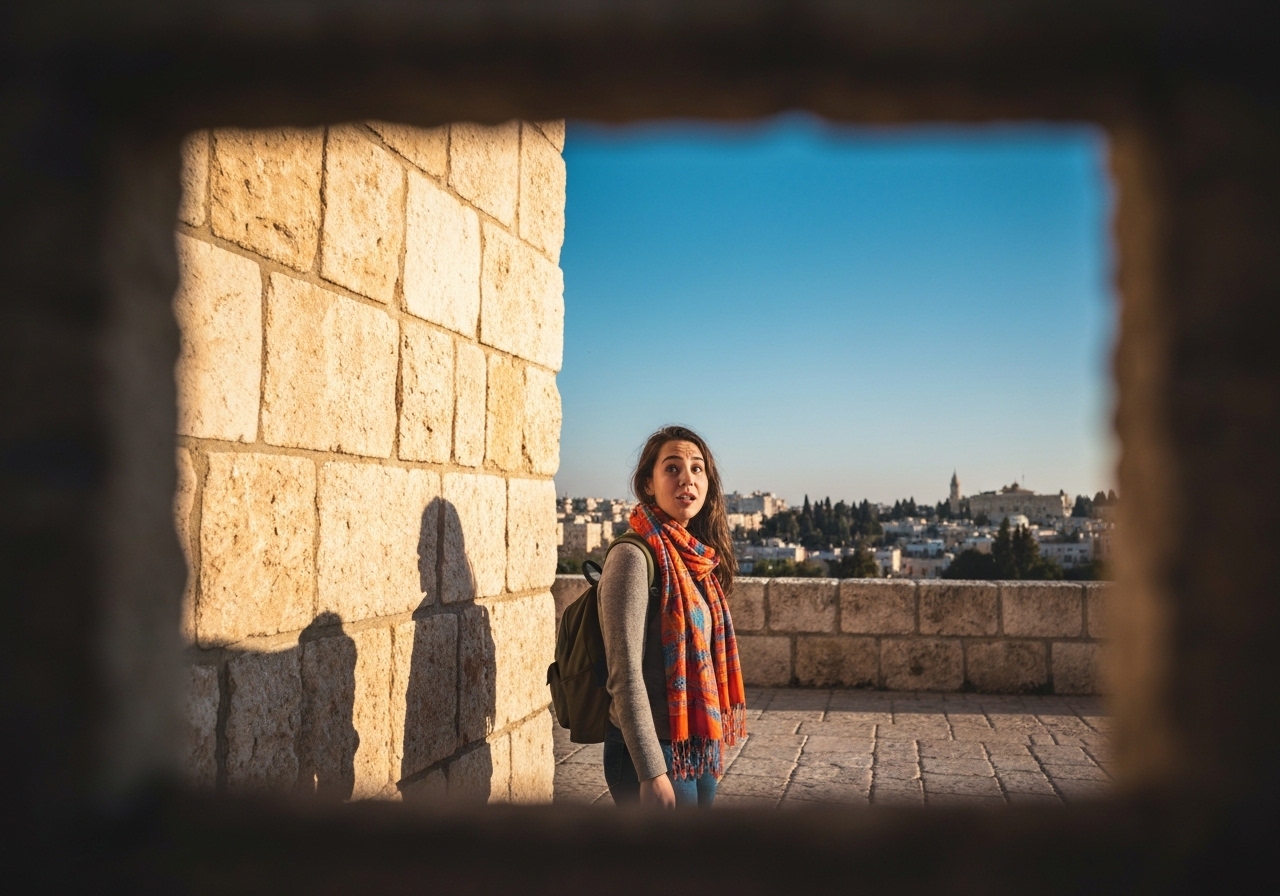
I approached slowly, feeling a bit like an outsider. I'm not Jewish, and I wondered if my presence might seem intrusive. But no one paid me any mind as I found a spot at the wall and placed my hand on the cool stone. Centuries of prayers have worn smooth depressions in the limestone.
What struck me most was the texture—rough in some places, polished in others, with small folded papers tucked into every available crack, each containing someone's deepest hopes and prayers. I stood there for nearly thirty minutes, watching as the first rays of sunlight gradually illuminated the top of the wall while the plaza below remained in shadow.
I didn't pray, exactly, but I did find myself thinking about the purpose of my journey. What am I seeking in these 500 days of travel? Am I running from something or toward something? Standing there, with 147 days behind me and 353 ahead, I felt both small and connected to something much larger than myself.
By 7:30, I was seated at a small café just outside the Old City walls, warming my hands on a cup of coffee and watching Jerusalem wake up. The coffee was decent—strong and served with a small cookie on the side—though nothing that would impress the baristas back home.
---
After breakfast, I decided to visit the Israel Museum to see the Dead Sea Scrolls. I arrived just before the 10:00 opening time and joined the small queue forming outside. The museum is a sprawling complex on a hill in western Jerusalem, and I found myself drawn immediately to the distinctive dome of the Shrine of the Book, which houses the scrolls.
The exhibition itself is masterfully done—the scrolls are displayed in a dimly lit circular room, with detailed explanations of their significance and discovery. Dating back to around 2,000 years ago, these ancient texts represent some of the oldest surviving biblical manuscripts. As someone who spends most days troubleshooting computer systems, there's something humbling about standing before documents that have survived millennia.
I spent over two hours exploring the museum, particularly enjoying the archaeological wing with its models of ancient Jerusalem. The highlight was undoubtedly the enormous scale model of Jerusalem during the Second Temple period—an intricate recreation showing what the city might have looked like around 66 CE. It provided a fascinating context for the sites I've been visiting in the Old City.
By early afternoon, I needed a break from the intensity of sightseeing. I found a small park near the museum with a few impressive cypress trees and sat for a while, watching local families enjoy the winter sunshine. The temperature had climbed to about 9°C—still cool, but pleasant in the sun.
---
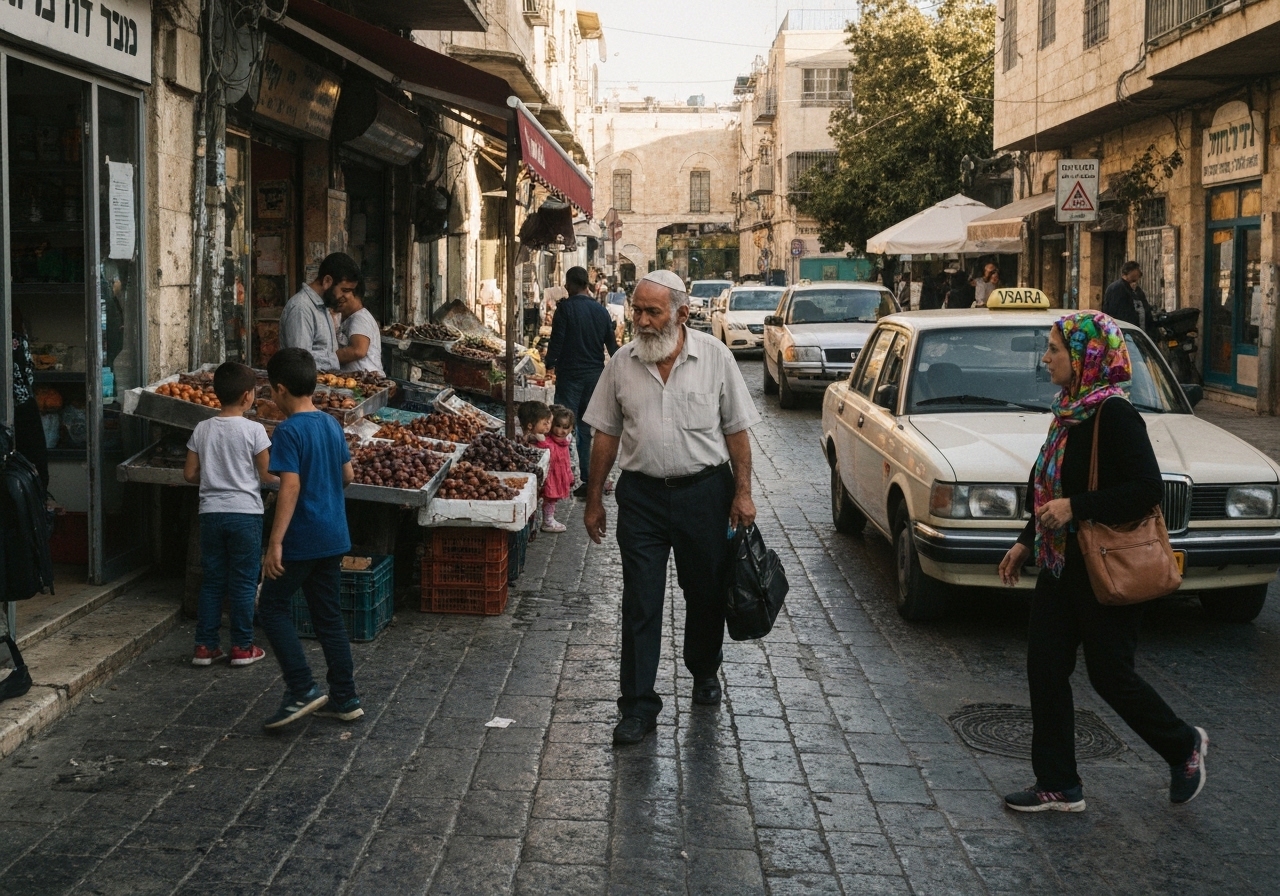
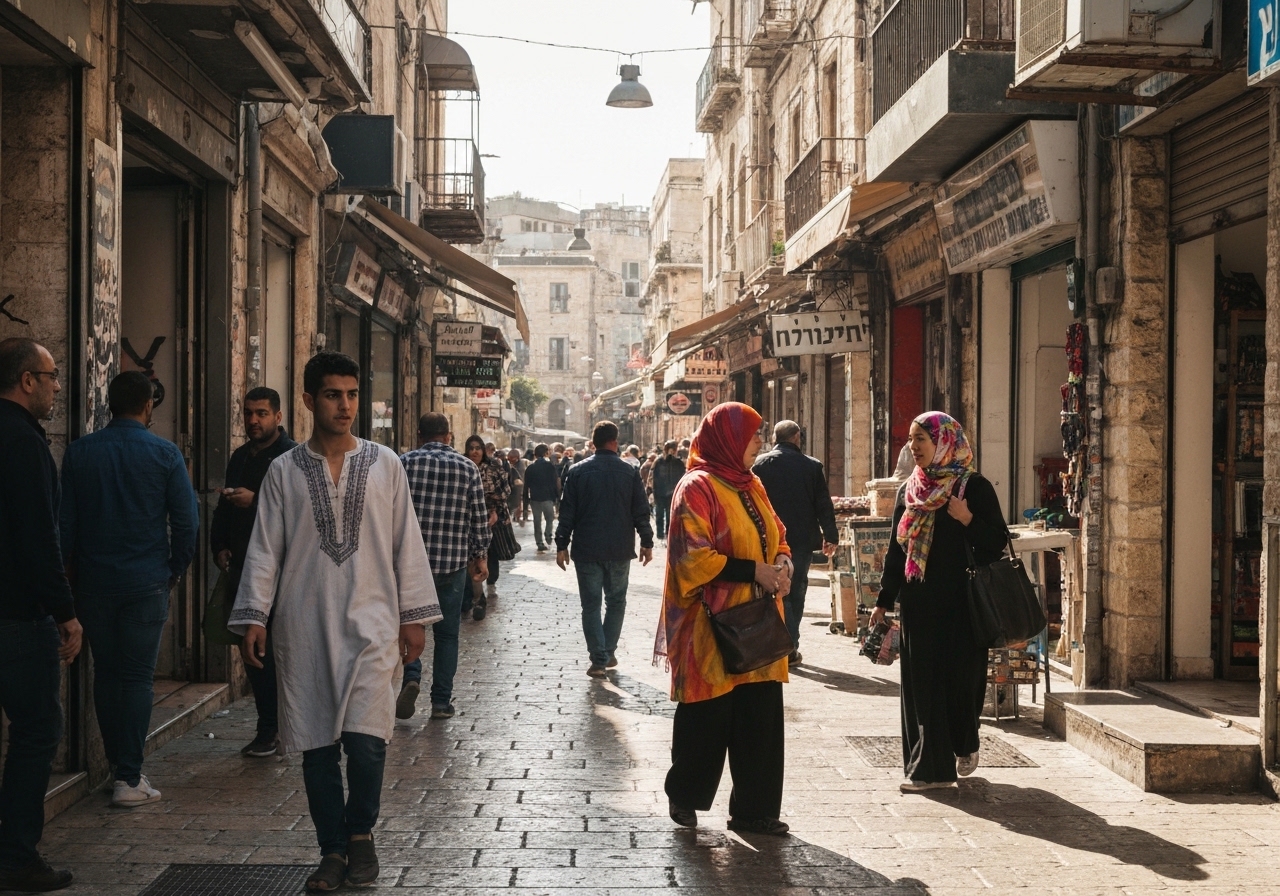
I returned to the Old City around 3:00 PM, this time entering through Damascus Gate into the Muslim Quarter. The atmosphere here was entirely different from the morning's solemnity—the narrow streets buzzing with vendors calling out their wares, the air filled with the scents of fresh bread, cardamom, and coffee.
I wandered through the market, watching the interactions between shopkeepers and customers, the practiced haggling that seemed more ritual than conflict. At one point, I stopped to help an elderly French tourist who was struggling with connecting to the public WiFi. A small fix, but her grateful smile made me feel momentarily useful.
News of the UNRWA headquarters demolition in East Jerusalem seems to be on everyone's lips. I overheard several heated discussions between vendors, though they switched to English when customers approached. It's a stark reminder of the complex realities that exist alongside the tourist experience of this city.
As the sun began to set, I made my way back to the Jewish Quarter, finding a small restaurant for dinner. The menu featured traditional Jewish dishes, and I opted for a hearty bowl of matzo ball soup followed by lamb with couscous. The restaurant began to fill up as I ate, mostly with local families and a few tourists like myself.
Now, back at my hotel as evening settles over Jerusalem, I'm reflecting on the layers of history and meaning I've encountered today. This city functions simultaneously as a living community and an open-air museum, with the everyday and the extraordinary existing side by side.
Tomorrow, I plan to visit the Garden of Gethsemane and explore the Mount of Olives. There's so much to see in Jerusalem, and I'm increasingly aware that my few days here will only scratch the surface. But perhaps that's part of the lesson—the impossibility of fully knowing any place, especially one as complex as this.
353 days remain on this journey. Sometimes that feels like forever, and other times—like today, confronted with thousands of years of human history—it seems like barely a moment.