Sunset reflections at the white terraces
I'm sitting on the edge of one of the lower terraces, feet dangling in the warm mineral water as the last light of day casts the entire landscape in a soft golden glow. The pure white calcium deposits look almost surreal in this light - like freshly fallen snow, except it's 18°C and I'm wearing shorts.
This morning started with my planned exploration of Pamukkale's famous travertine terraces. I'd set my alarm for 7:30, giving me plenty of time to enjoy breakfast before heading to the site at opening time. The hotel receptionist had assured me that 9:00 would be ideal - early enough to beat the crowds but not so early I'd be standing around waiting.
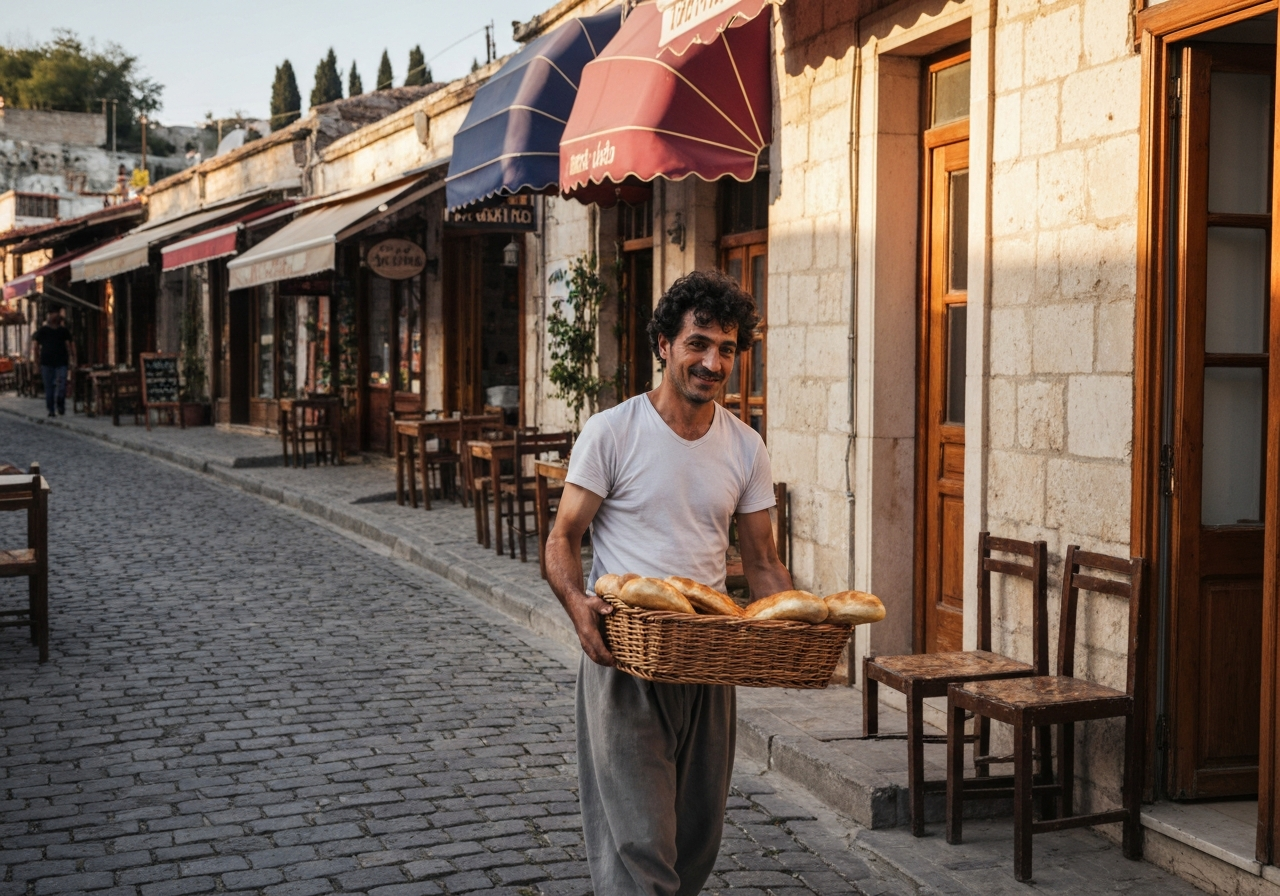
Breakfast was a typical Turkish spread - olives, tomatoes, cucumber, cheese, bread, and honey. I've grown quite fond of this morning ritual over the past weeks in Turkey. The simplicity of it, the freshness of the ingredients. As I sipped my tea (still missing proper coffee), I mapped out my day on my phone.
I arrived at the southern entrance at 8:50, ten minutes before opening. Only a handful of other visitors were waiting, mostly photographers hoping to capture the terraces in the morning light. The ticket seller smiled when I approached. "You're early," he noted, already preparing my ticket.
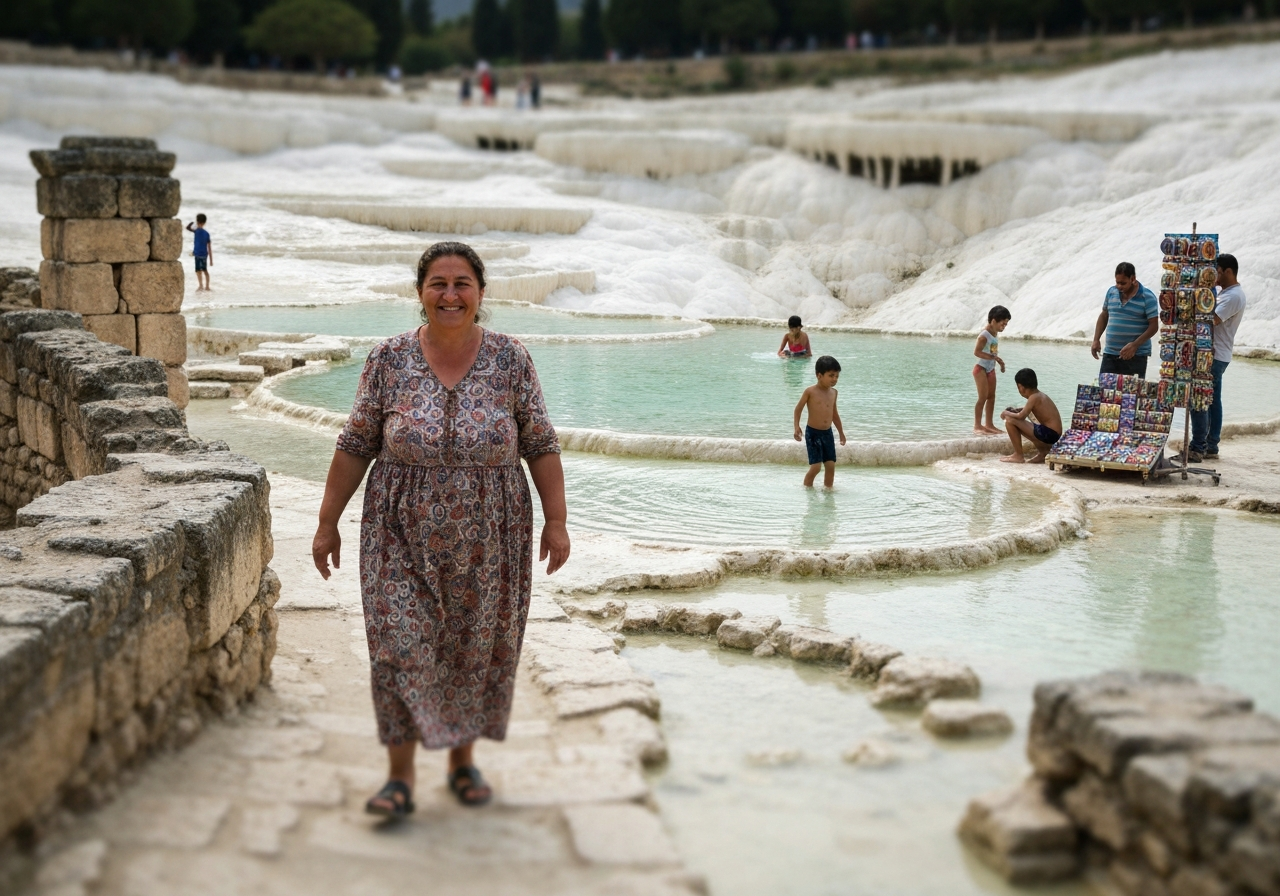
The site itself is a fascinating blend of natural wonder and ancient history. The terraces - called travertines - are formed by calcium-rich thermal waters flowing down the hillside, depositing calcium carbonate that hardens into the white shelves that give Pamukkale ("cotton castle" in Turkish) its name.
I spent the first hour simply wandering among the terraces, watching the water flow from pool to pool. There's something mesmerizing about it - the gentle trickle of water, the perfect blue against stark white, the steam rising in the morning air.
By midday, I'd made my way up to Hierapolis, the ancient city at the top of the travertine hill. Founded around 190 BCE, it became a healing center where people came to bathe in the thermal springs. Walking through the ruins, I tried to imagine what it must have been like - people traveling for days or weeks to reach this place, hoping the mineral-rich waters would cure their ailments.
The theater was particularly impressive - built in the 2nd century CE and later renovated under Roman rule, it could seat 12,000 people. I climbed to the top row and sat for a while, looking out over the valley below. The view must have been as breathtaking then as it is now.
After exploring the ancient ruins, I visited the Archaeological Museum, housed in what was once a Roman bath. The collection of sarcophagi is remarkable - intricately carved stone coffins depicting mythological scenes, their details still crisp after thousands of years.
By mid-afternoon, the site had filled with tour groups, so I decided to head back down to the terraces for another dip. This time, I found a quieter pool away from the main path. Sitting in the warm mineral water, I noticed a small, twisted pine growing impossibly from a crack in the travertine. It reminded me of the resilient trees in Cappadocia's Rose Valley - finding life in the most unlikely places.
As the day visitors began to leave, I decided to stay for sunset. The terraces take on an entirely different character as the light changes - shadows lengthening, the white calcium deposits reflecting the deepening colors of the sky.
Now, as dusk settles over Pamukkale, I'm struck by how quickly time is passing. Day 170 of 500. I've completed just over a third of my journey, yet it feels both longer and shorter than that. Longer in the sense that Kristiansand seems like a distant memory, shorter in that I still have so many places I want to see.
I look down at my hands, slightly wrinkled from hours in the mineral water. Will these waters change me too? The ancients believed in their healing properties - that they could cure everything from skin diseases to circulation problems. I don't know about that, but there is something transformative about sitting here, halfway around the world from home, watching the sun set over an ancient landscape.
Tomorrow, I plan to take a day trip to Laodicea, another ancient city about 10km from here. It was once a prosperous banking center and is mentioned in the Bible's Book of Revelation. The ruins are less visited than Hierapolis, which appeals to me after today's crowds.
For now, though, I'm content to sit in this moment, feet in thousand-year-old waters, watching the stars begin to appear above the white terraces of Pamukkale.