Morning in Pamukkale: a world of white and blue
The bus from Antalya deposited me in Pamukkale late yesterday evening, too dark to see anything beyond the dim lights of the small town nestled against what I knew must be the famous white terraces. I checked into a simple but comfortable hotel with a view that promised to reveal itself come morning.
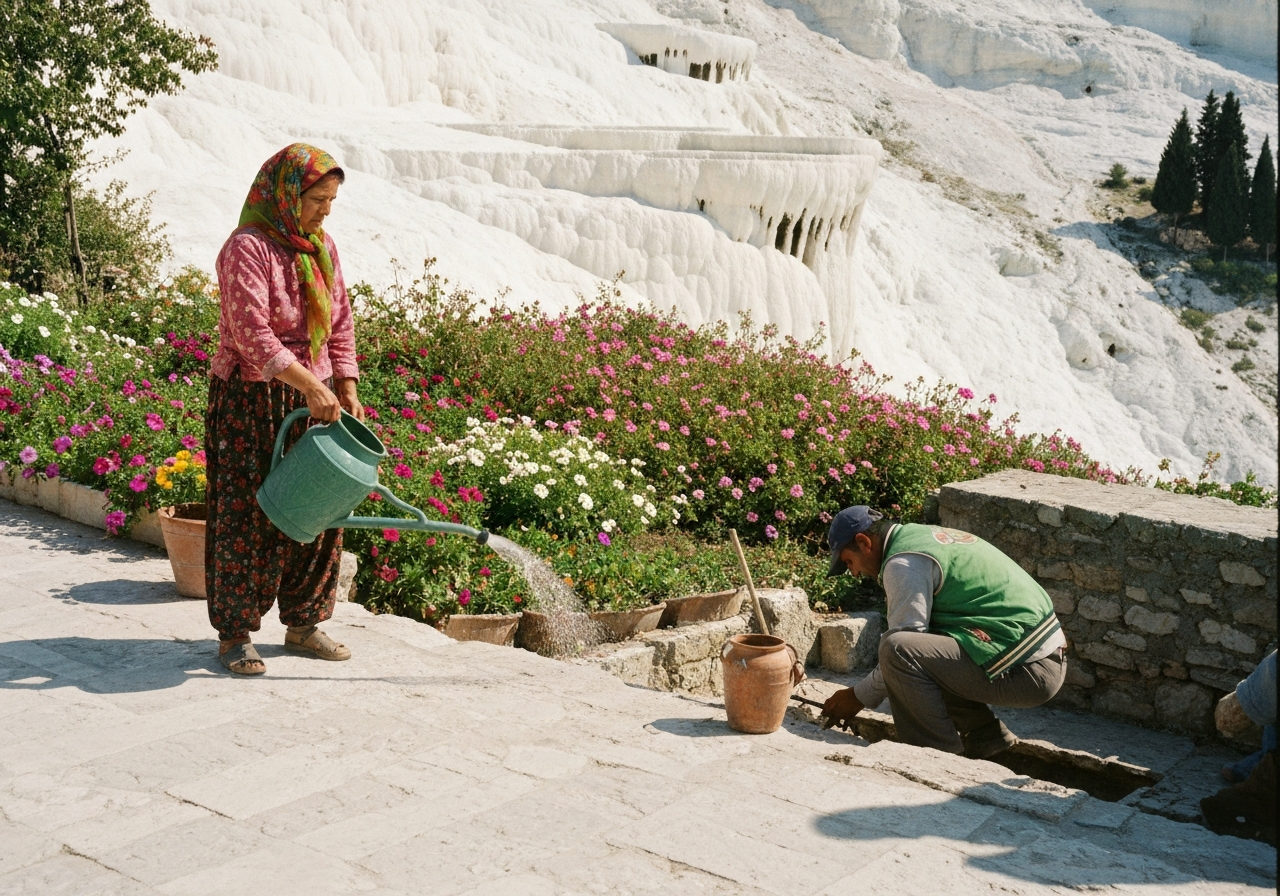
I woke early, as usual. Standing on my small balcony at 7:30, I finally saw what makes this place so special - a massive hillside that looks like it's been carved from snow or salt, gleaming white against the morning sky. The famous calcium travertines of Pamukkale stretched before me, with the ruins of ancient Hierapolis perched above.
After a quick breakfast (the coffee was acceptable, though lacking the richness I prefer), I set out to explore. The hotel owner advised that the terraces wouldn't be too crowded if I went now, before the tour buses arrive.
I reached the entrance gate at 8:50, ten minutes before opening. Only a handful of other travelers waited, mostly older couples with sensible hiking shoes and a few solo travelers like myself. The attendant opened the gate precisely at 9:00, and I removed my shoes as instructed to walk barefoot on the travertines.
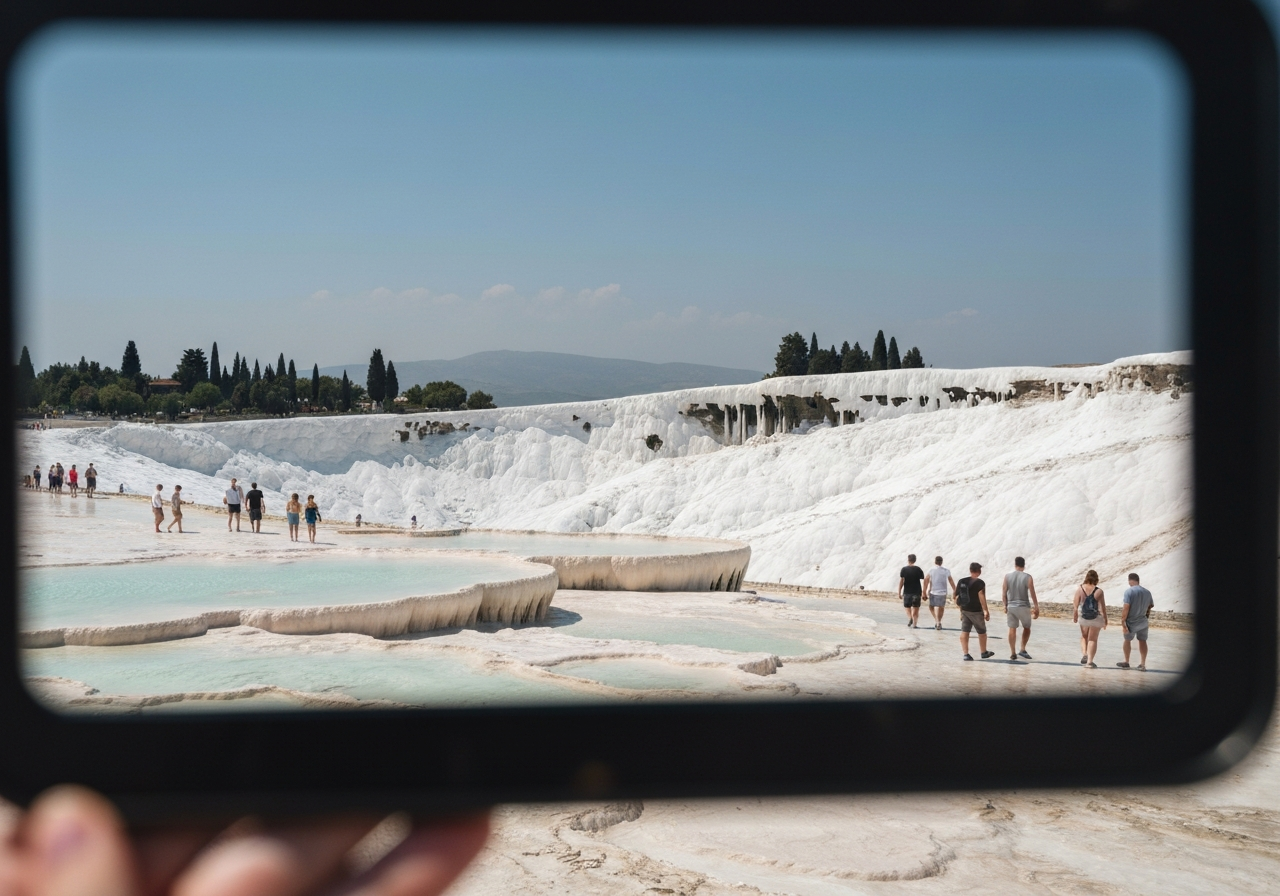
The sensation is unlike anything I've experienced. The mineral deposits feel smooth in some places, rough in others, and the water flowing down the terraces is surprisingly warm against my feet. The calcium-rich water has created these formations over thousands of years, building up layer by layer into pools and terraces that cascade down the mountainside.
I spent nearly an hour just walking slowly across the white landscape, careful not to slip on the wet surfaces. The morning sun created a dazzling effect as it reflected off the white calcium and blue water. A Japanese tourist asked me to take her photo, and I obliged, then continued my solitary exploration.
It's interesting how this place makes me feel simultaneously insignificant and connected to something ancient. These terraces have been forming for millennia, long before humans built the city of Hierapolis above them. The ancient Romans believed in the healing properties of these thermal waters, constructing elaborate baths and temples to harness their power.
I'm currently taking a short break at a small café near the entrance, jotting down these thoughts before heading up to explore the ancient city ruins. The temperature is pleasant - about 14°C according to my phone, with clear skies promising a perfect day for exploration.
There's something meditative about this landscape that seems to be affecting me deeply. After 196 days on the road, I find myself increasingly drawn to places shaped by natural forces over vast stretches of time. Perhaps it's a way of putting my own journey into perspective - 500 days seemed like such a long time when I started, but against the backdrop of these ancient formations and ruins, it's barely a moment.
I still have 304 days ahead of me, and standing here between the white terraces and blue sky, I wonder what transformations my own journey will create, layer by layer, day by day.
Time to continue exploring. The ancient theater of Hierapolis awaits above, and I'm curious to see what trees might have taken root among the ruins. This afternoon, I plan to visit Cleopatra's Pool, where ancient columns lie submerged in thermal waters. Swimming among pieces of history - what a strange and wonderful prospect.
More later, perhaps after I've had a chance to float among fallen Roman pillars.