An afternoon of white houses and ancient stones
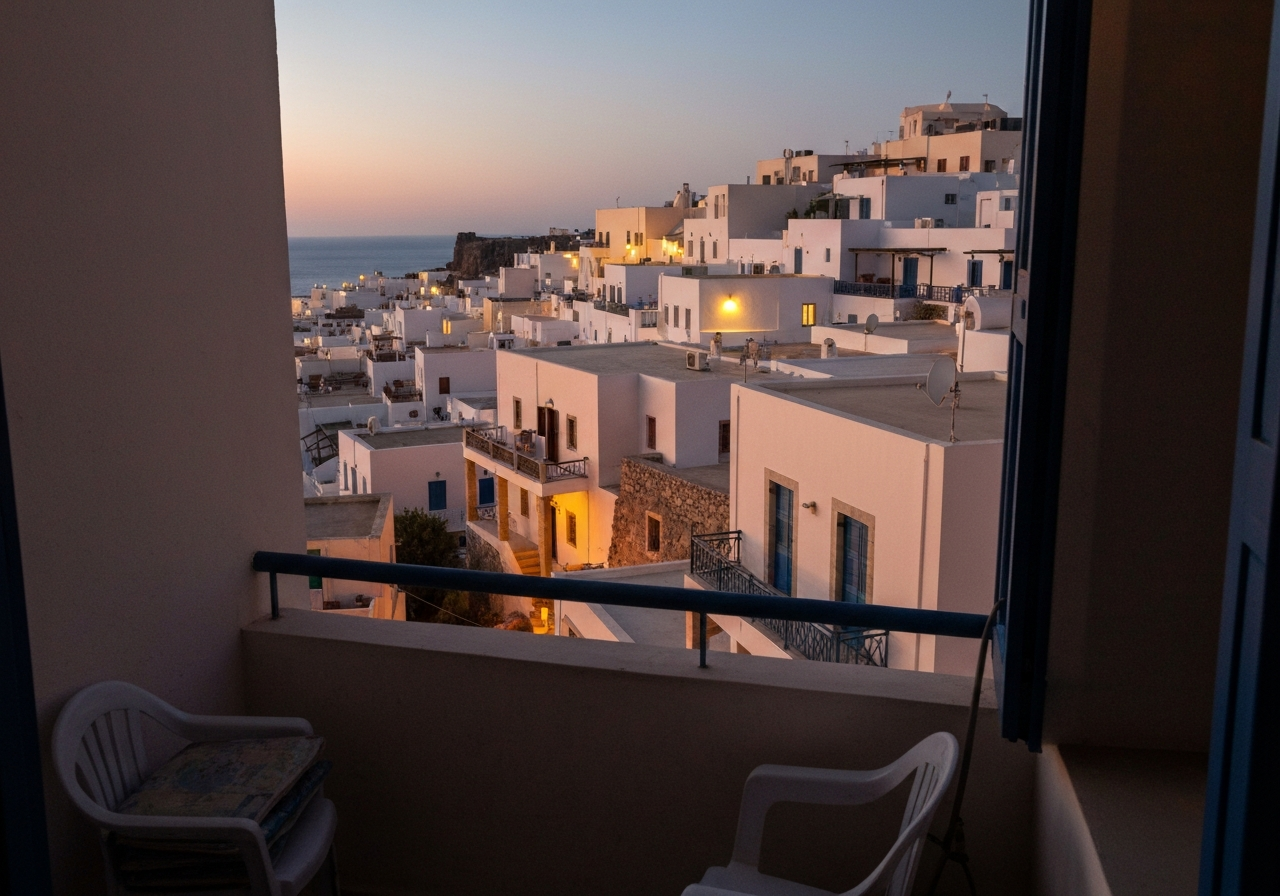
It's amazing how a short distance can transport you to what feels like another world entirely. This morning I packed a small bag, checked out of my hotel in Rhodes Town, and hopped on a bus to Lindos. Just 50 kilometers later, I'm sitting on a small balcony overlooking a village of pristine white-washed houses cascading down toward the sea.
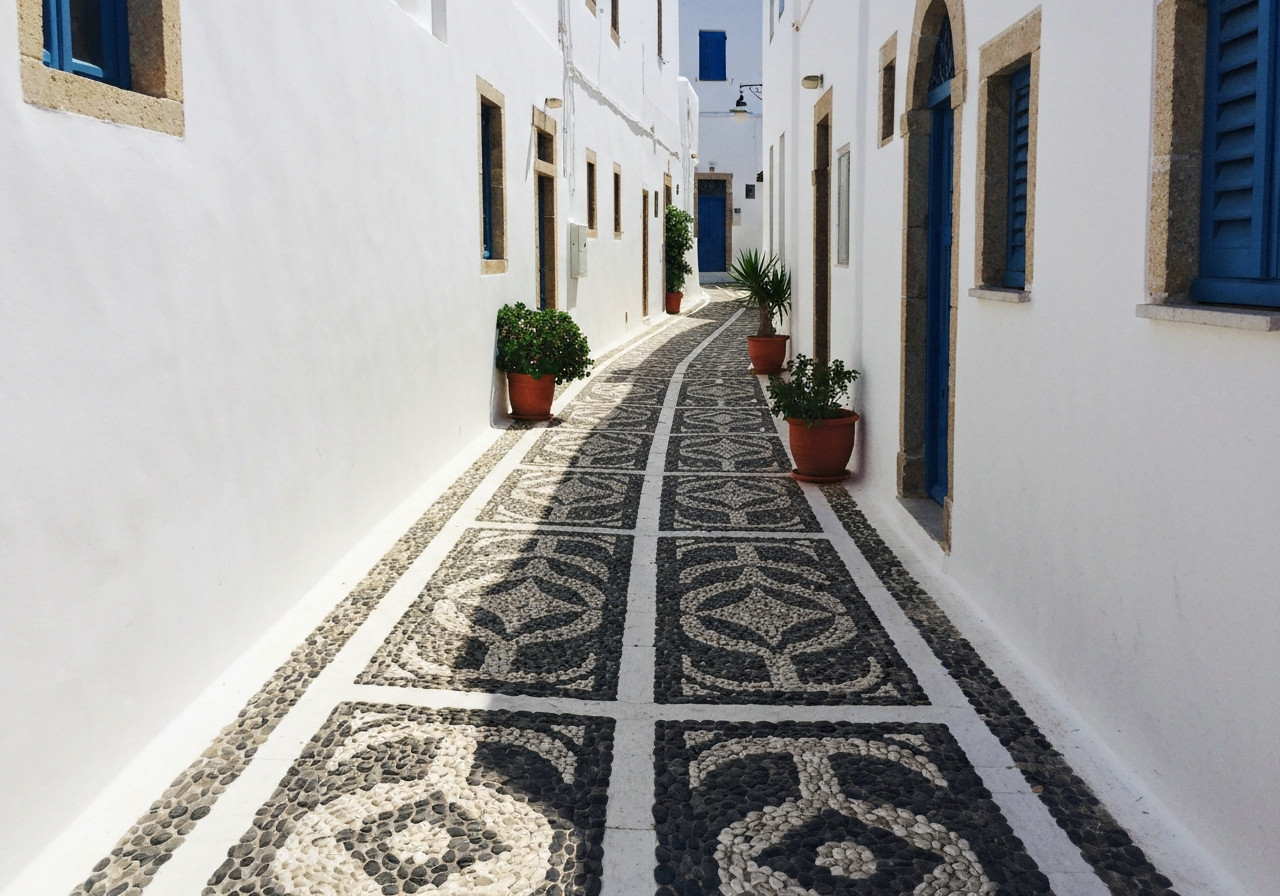
I arrived in Lindos just before noon. The bus dropped us off at the main parking area, as the village center is pedestrian-only. Walking into Lindos for the first time is something special - the houses are so uniformly white that they almost hurt your eyes in the midday sun. The narrow, winding streets are paved with a mosaic of small black and white pebbles arranged in intricate patterns.
After checking into my guest house (which I'd booked last night after deciding Rhodes Town wasn't enough to truly experience this island), I set out immediately to explore. My first destination was obvious - the Acropolis of Lindos stands proudly atop the hill overlooking the village. I could see it from almost everywhere, calling to me.
The climb up was steeper than I expected. About halfway up, I passed a couple in their 60s who were taking a break in whatever shade they could find.
"Is it worth it?" the woman asked me.
"I don't know yet," I replied. "I'm still on my way up. But these things usually are."
And it was. The Acropolis is extraordinary - a 4th century BCE temple complex perched dramatically on the cliff. The Temple of Athena Lindia stands in partial ruin, but you can still clearly see the grand design. What makes this site different from many ancient ruins I've visited is the setting. From up here, you get a 360-degree view of the Mediterranean Sea, the white village below, and the perfectly curved beaches on either side.
I spent over an hour wandering the ancient site, trying to imagine what it must have been like when it was whole. The fortifications added by the Knights of St. John in the 14th century create an interesting layering of history - ancient Greek foundations with medieval additions.
The sun was quite strong by early afternoon, and I was grateful for my hat. There's very little shade up there. I noticed several tourists with red shoulders who clearly hadn't prepared for the Mediterranean sun, even in April.
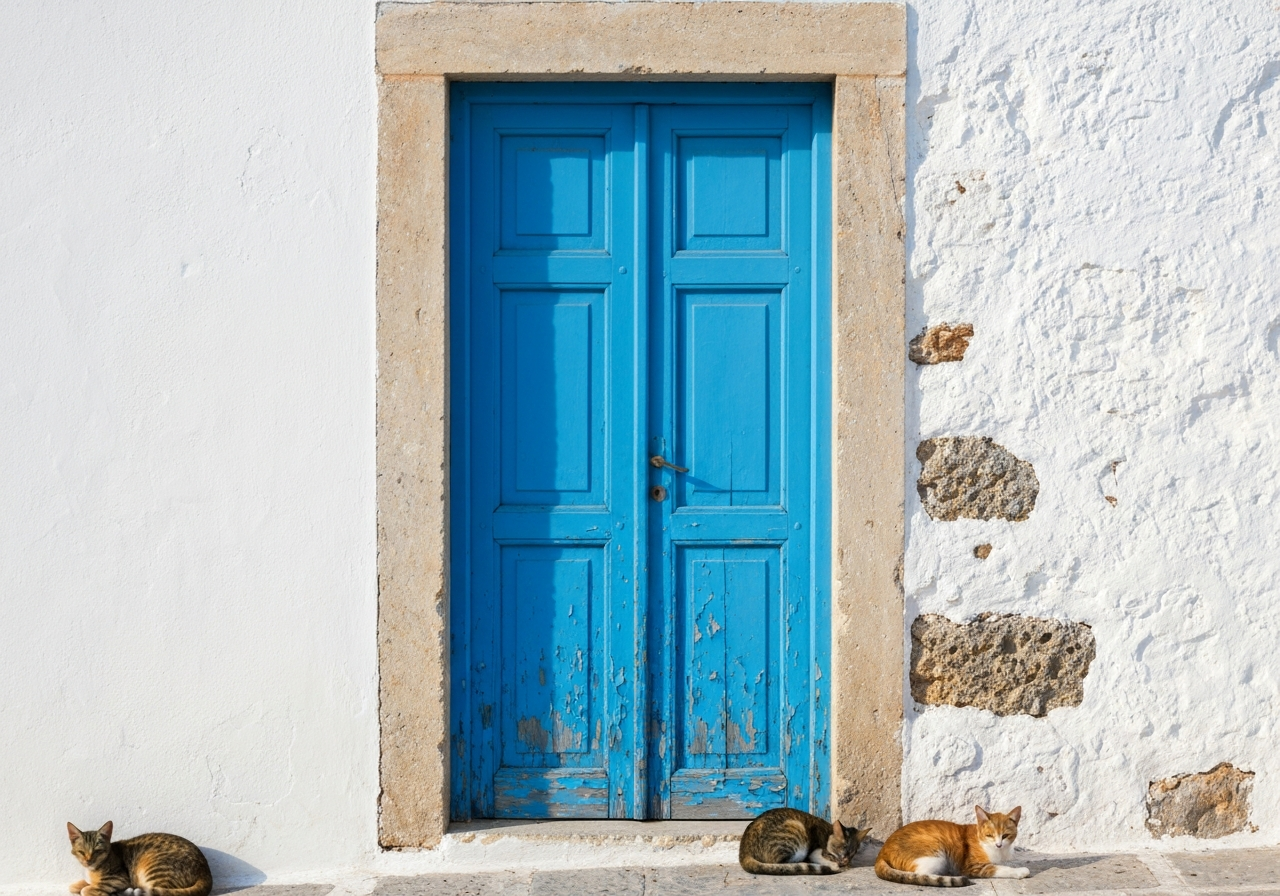
After descending from the Acropolis, I followed the narrow lanes through the village, occasionally stepping into doorways to let donkeys pass - they're still used to transport goods (and sometimes tourists) up and down the steep paths. The village is a maze of white-washed buildings with bright blue doors, small shops selling everything from olive oil soap to handmade sandals, and restaurants with terraces overlooking the sea.
I stopped for a late lunch at a small taverna tucked away on a side street. The owner, an older woman named Maria, recommended the stuffed vine leaves and fresh fish. Both were excellent. As I ate, I watched village life unfold - locals chatting across balconies, cats sunning themselves on walls, and tourists navigating the labyrinthine streets with varying degrees of confidence.
After lunch, I walked down to St. Paul's Bay, a small, sheltered cove just south of the village. According to local legend, this is where the Apostle Paul landed in Rhodes in 51 CE to preach Christianity to the Rhodians. Whether or not the story is true, the bay is stunning - a perfect semicircle of clear turquoise water surrounded by rocky outcrops.
I spent the rest of the afternoon there, alternating between swimming in the cool water and sitting on the rocky shore watching the light change on the Acropolis above. There were only a handful of other people there - a German couple reading books, a family with small children playing at the water's edge, and an elderly local man fishing from the rocks.
Now, back at my guest house with slightly sunburned shoulders (despite my careful application of sunscreen), I'm sitting on my tiny balcony watching the village transition from day to evening. Lights are starting to come on in the houses and restaurants, and the white walls are taking on a golden hue from the setting sun.
Tomorrow I plan to explore more of the eastern coast, perhaps visiting some of the other beaches. I've also spotted some interesting-looking olive trees on the outskirts of the village that I want to photograph. They're incredibly gnarled and ancient-looking - some of them might be hundreds of years old.
As I sit here, I'm struck by how different this experience is from Rhodes Town. Both are beautiful and historically significant, but Lindos has a quieter, more intimate feeling. The absence of cars in the village center changes everything - the pace, the sound, even the quality of the air.
Day 237 of 500. I'm not quite halfway through my journey, but I'm starting to understand something about what I'm looking for. It's not just about seeing new places, but about experiencing different ways of being in the world. In the hurried pace of my former life, I might have visited Lindos as a day trip, checking off the Acropolis and heading back to Rhodes Town by evening. I would have missed this - the gentle transition from day to night, the way the village changes when most of the day-trippers leave, the opportunity to just sit and be present in this beautiful place.
The sun is setting now, casting long shadows across the white houses. Time to find some dinner.