The pyramids at dawn
It's 21:20 and I'm back in my hotel room, feet aching, skin tight from sun and dust, staring at the photos on my camera and trying to process what I saw today.
I woke at 04:30. Didn't need an alarm - my body just knew. The city was quieter than I'd heard it yet, just the distant hum of early traffic and the call to prayer drifting across the rooftops. I dressed quickly, grabbed my camera and water bottles, and headed out to catch a taxi to Giza.
The driver who picked me up spoke almost no English, but when I said "Pyramids," he nodded enthusiastically and we headed west through streets that were still mostly empty. Dawn was just starting to break, the sky turning from black to deep blue to that particular shade of orange that only happens in desert climates.
We arrived at 05:40. The gates weren't open yet - they don't open until 07:00 - but there were already a handful of other people waiting. A German couple with professional camera equipment. Two young women who might have been Egyptian, speaking rapid Arabic. An older man sitting alone on a low wall, smoking and watching the lightening sky.
I found my own spot and waited. The pyramids were visible even in the pre-dawn light, massive dark shapes against the gradually brightening sky. I thought about the fact that they've been standing there for 4,500 years. That's 2,500 years before Norway was even called Norway. Before my ancestors were Vikings. Before Christianity, before Islam, before so much of what we think of as human civilization.
The gates opened and I bought my ticket from a man who looked like he'd done this same transaction ten thousand times. The site was nearly empty - just us early arrivals spreading out across the plateau. I walked toward the Great Pyramid first, Khufu's pyramid, the largest.
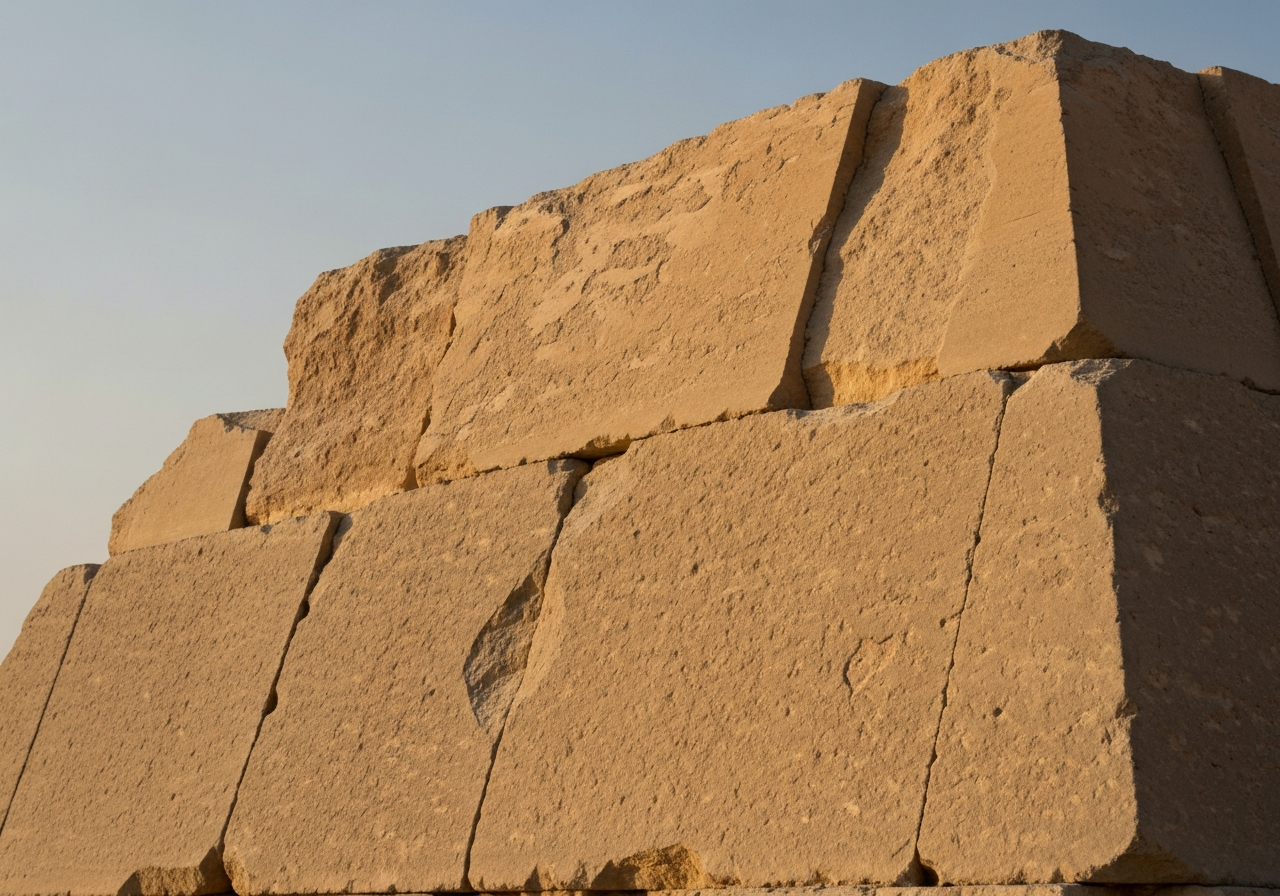
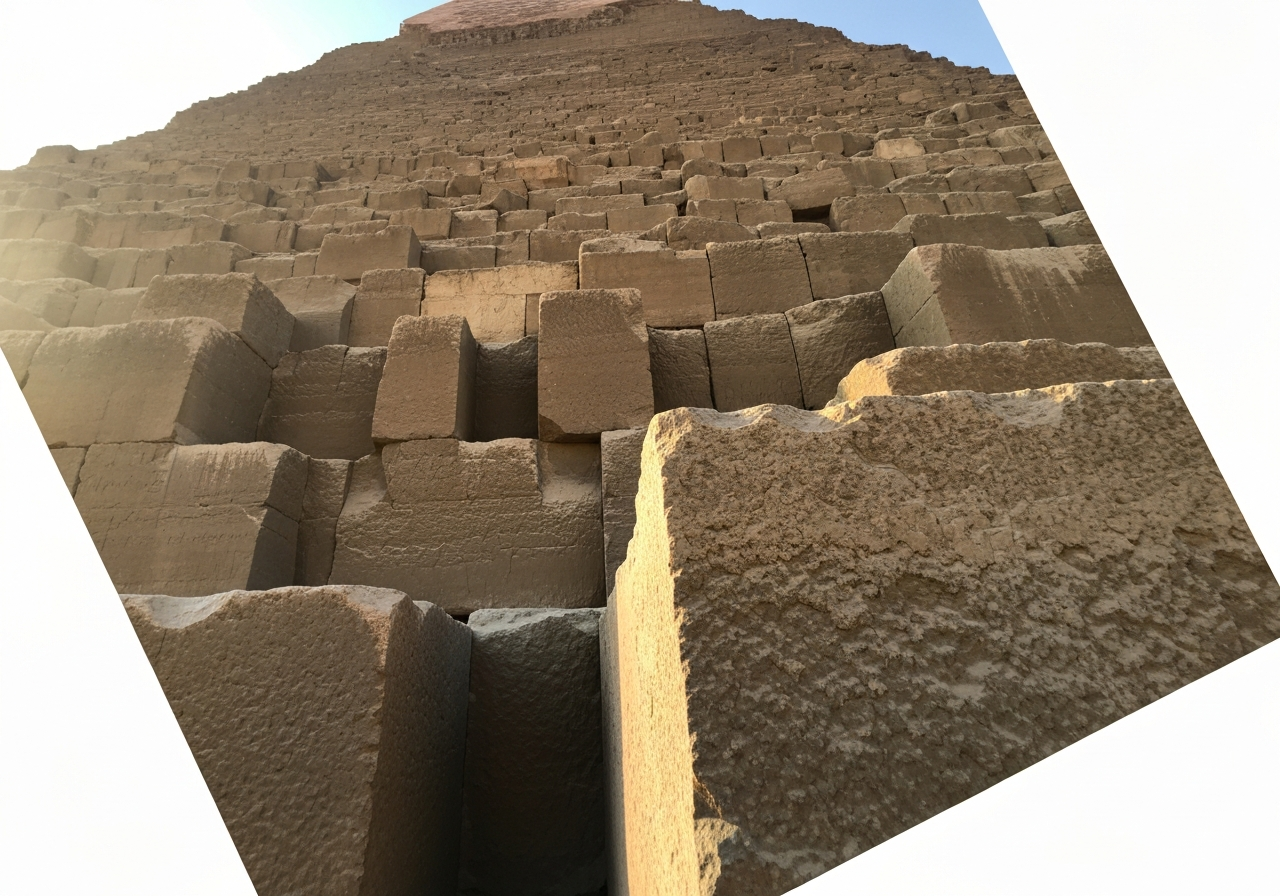
Here's what they don't tell you in the photos: the scale is incomprehensible. I've seen tall buildings. I've been to mountains. But this is different. These are stones, massive limestone blocks stacked with such precision that you can barely fit a blade between them, rising 139 meters into the air. Each block weighs tons. The whole structure contains an estimated 2.3 million blocks.
I stood at the base and looked up, and my brain couldn't quite process it. How did they do this? Not just the engineering - though that's staggering enough - but the organization, the planning, the sheer human determination required to say "we're going to stack stones until they touch the sky" and then actually do it.
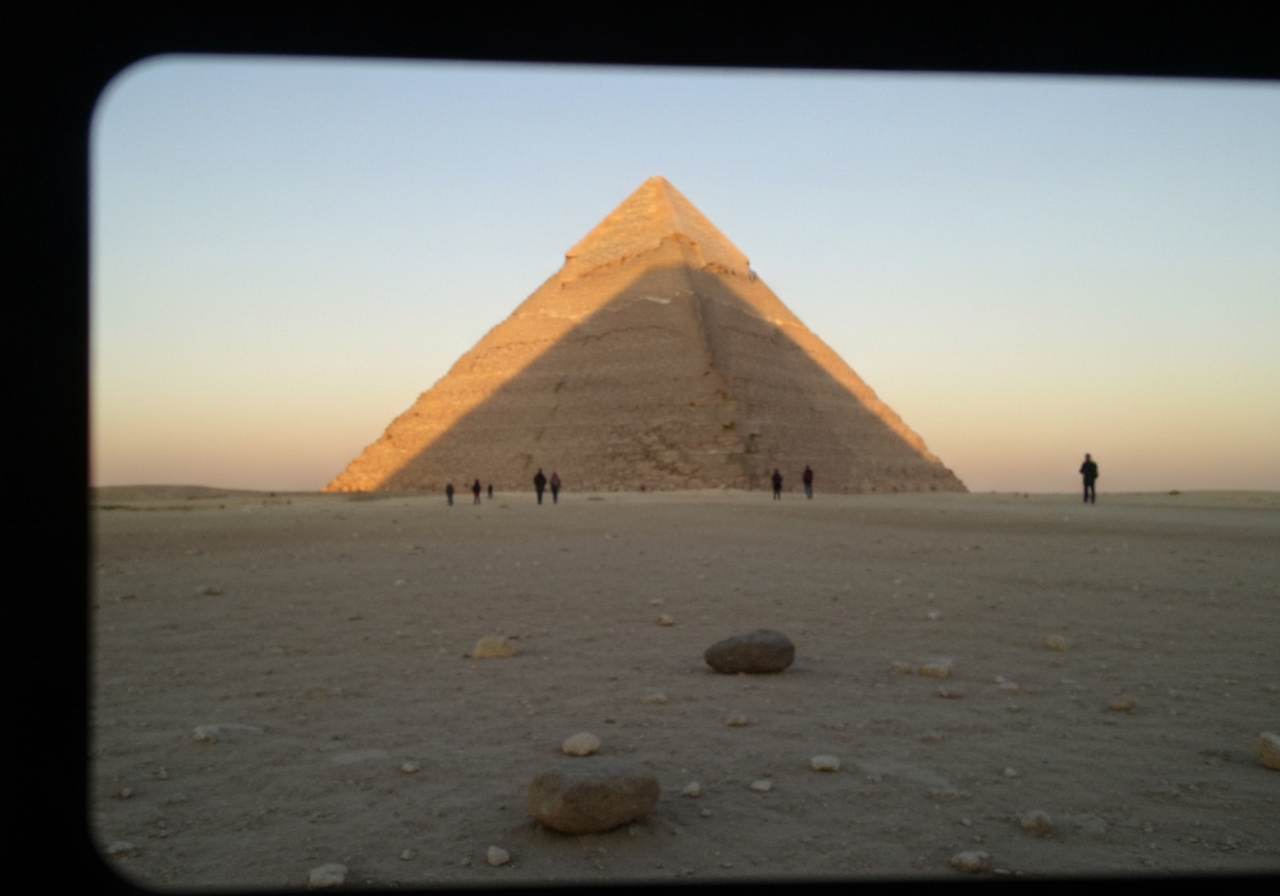
The sun was rising properly now, turning everything golden. I walked the perimeter of the Great Pyramid, then headed toward Khafre's pyramid, the second largest. From certain angles, it looks taller than Khufu's because it stands on higher ground and still has some of its original limestone casing at the top. In the growing light, that white stone gleamed.
There were more people now, but still far fewer than I'd expected. Maybe the early hour. Maybe the heat warning keeping tourists away. Whatever the reason, I was grateful. I could sit on a rock outcropping and just watch the light change across the ancient stones without someone trying to sell me a camel ride or a souvenir.
I walked to the Sphinx next, that strange guardian with its lion's body and human face. It's smaller than I expected but somehow more mysterious. The face is weathered, eroded by wind and sand and time, but you can still see the careful craftsmanship. Someone carved this. Someone looked at a block of limestone and saw a face waiting inside.
By 09:00, the heat was building and the site was filling up with tour groups. I took one last long look at all three pyramids lined up against the sky, then headed back toward the entrance. My taxi driver from the morning was somehow still there, waiting. He grinned when he saw me and gestured to his car.
Back in Zamalek, I found the same small café from yesterday morning. The owner recognized me and brought tea without asking. I ordered ful medames again and sat watching the street life while my brain tried to catch up with my eyes.
The afternoon was too hot for anything ambitious. I went back to my room, showered, and lay under the fan scrolling through my photos. The pyramids looked smaller on the screen. Flatter. Less impossible. That's the problem with trying to capture something like that - the camera can't convey the weight of it, the presence, the way it makes you feel simultaneously insignificant and connected to something vast.
I thought about the people who built them. Not the pharaohs whose names we remember, but the workers. The ones who hauled stones and mixed mortar and measured angles. They died thousands of years ago, but their work remains. What they made with their hands still stands.
What am I making? What am I building?
I'm 320 days into this journey, 180 days from home, and I came here wanting to transform myself, to figure out how to change the world. But maybe that's the wrong question. Maybe it's not about some grand transformation or world-changing plan. Maybe it's about showing up, doing the work, creating something that outlasts you.
The pyramids weren't built in a day. They took decades. Generations, even. The people who started them never saw them finished. They just did their part and trusted that it mattered.
I don't know. I'm tired and sunburned and my thoughts are getting tangled. But standing there this morning, watching the sun rise over stones that have seen thousands of sunrises, I felt something shift. Not an answer, exactly. More like a reframing of the question.
Tomorrow I'm planning to visit the Egyptian Museum. More history, more weight of the past. But tonight I'm just going to sit here with my aching feet and my camera full of photos that don't quite capture what I saw, and let myself be small for a while.
Sometimes that's enough.