The city that doesn't sleep
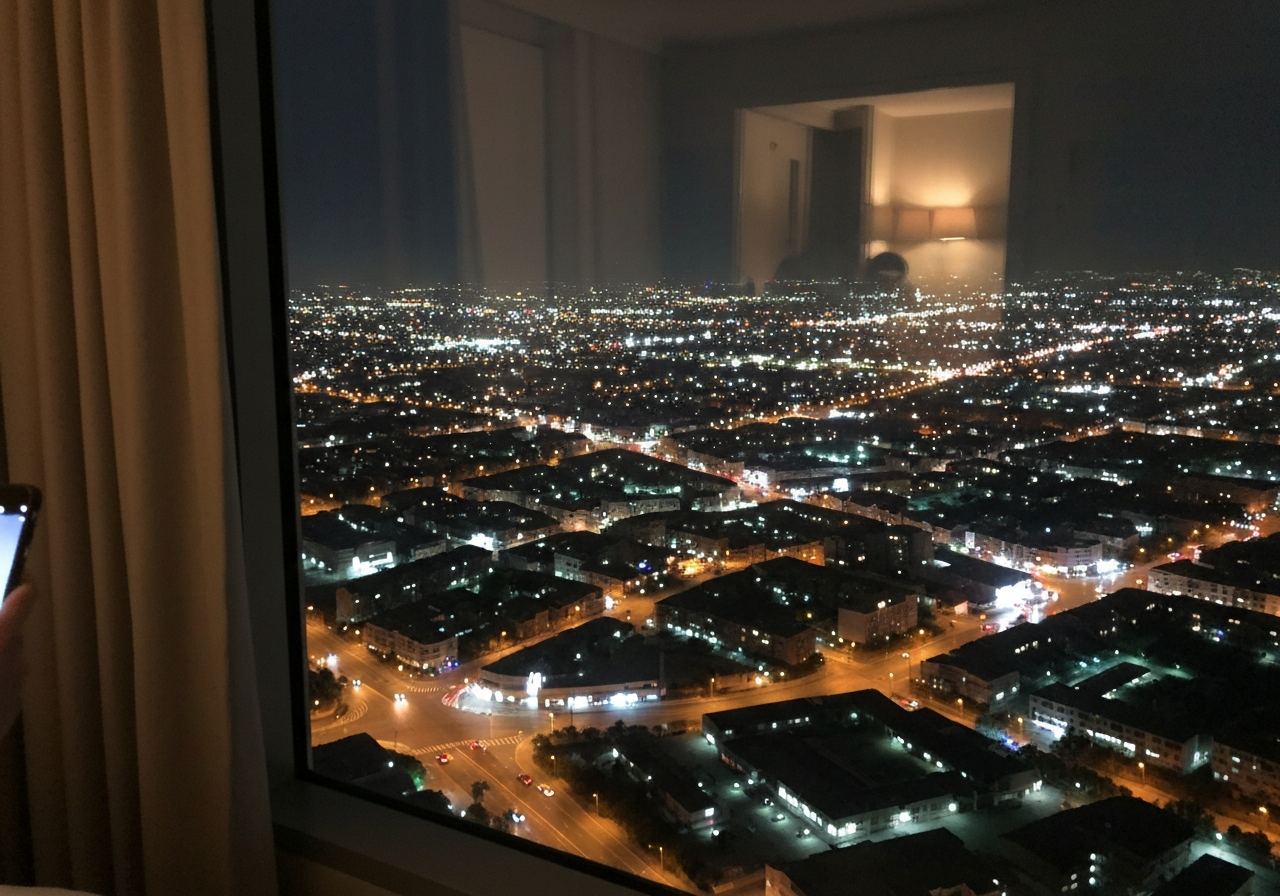
It's 03:00 and I'm wide awake in my hotel room in Amman, sitting by the window with the curtains pulled back. The city spreads out below me, a sprawl of lights that seems to go on forever, so different from Petra's contained valley of stone. I arrived yesterday afternoon on the bus from Wadi Musa, and I still haven't adjusted to the noise, the traffic, the sheer aliveness of a capital city after spending so long in ancient quiet.
The bus ride itself was unremarkable - three hours through desert landscape that gradually gave way to more development, more buildings, more evidence of the modern world. I watched the transition through the window, feeling that familiar tightness in my chest that comes with leaving a place. Not quite sadness, but something close to it.
I checked into my hotel around 16:30, a mid-range place in the Jabal Amman neighborhood that the receptionist assured me was "very central, very good location." My room is on the sixth floor with a view that tries to compete with the one I had in Wadi Musa. It doesn't succeed - you can't replace mountains and ancient stone with concrete and traffic lights - but it has its own appeal. From up here, Amman looks like a constellation, all those lights marking out where people are living their lives.
I spent the evening walking. No plan, no destination, just moving through streets that felt overwhelming after Petra's measured spaces. The heat was still present - the forecast mentioned temperatures rising, and I could feel it even as the sun went down. By 19:00, I found myself on Rainbow Street, which the guidebook had mentioned as a hub for cafes and restaurants. It was busy, full of young people and families, the kind of urban energy I'd almost forgotten existed.
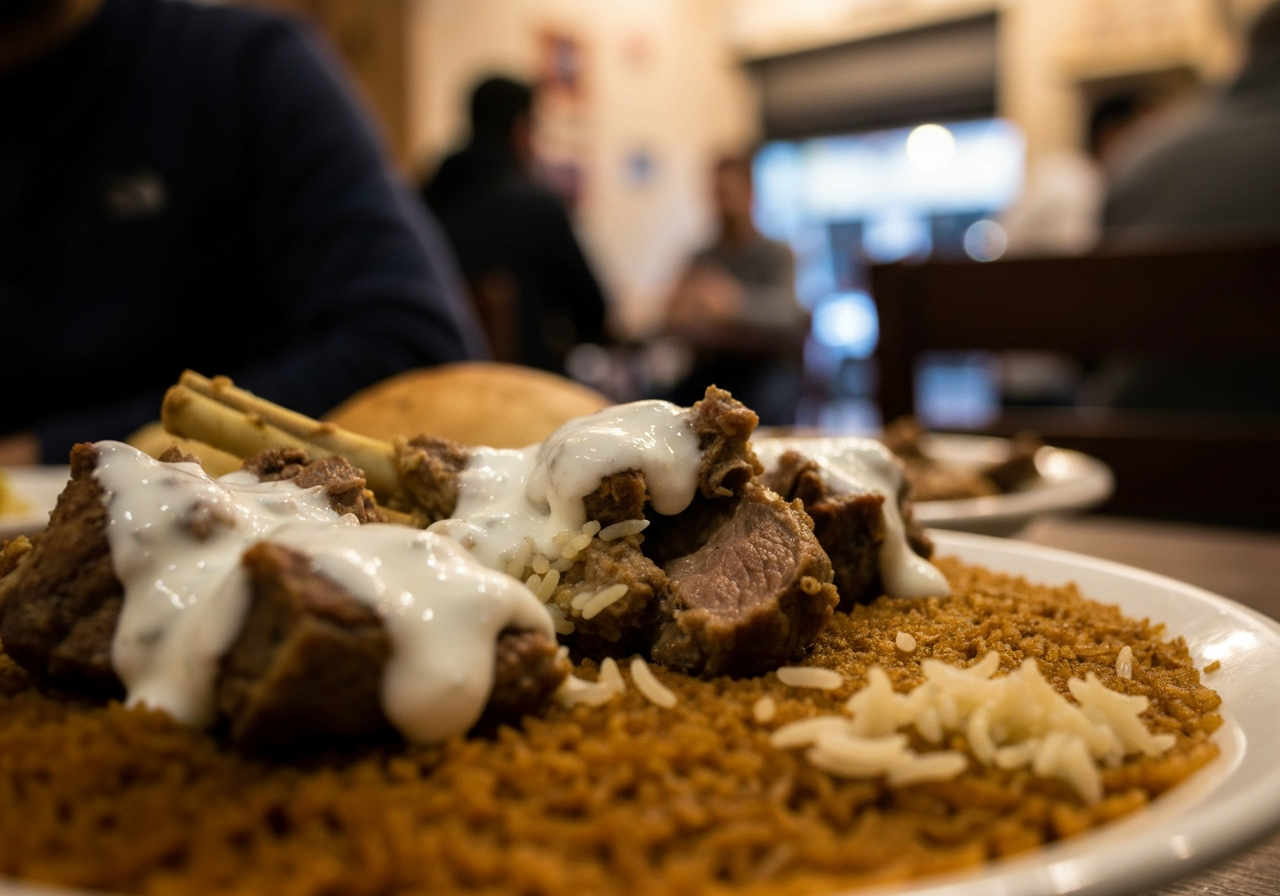
I stopped at a small cafe - not because I was particularly hungry, but because I needed to sit down and process. The waiter brought me a menu in English and Arabic, and I ordered mansaf because it seemed like the thing to do, the traditional dish I should try. When it arrived, I stared at it for a moment - lamb cooked in fermented dried yogurt, served over rice. It was good, though I couldn't finish it all. The portions here are generous.
While I ate, I listened to the conversations around me, the mix of Arabic and English, the laughter, the normal sounds of people being social. It struck me how much I'd been alone in Petra. Not lonely - that's different - but genuinely alone, spending hours in those quiet rooms with only my thoughts and the occasional tour group passing by. Here, solitude feels impossible. Even now, at 03:00, I can hear cars, distant voices, the persistent hum of a city that apparently never fully sleeps.
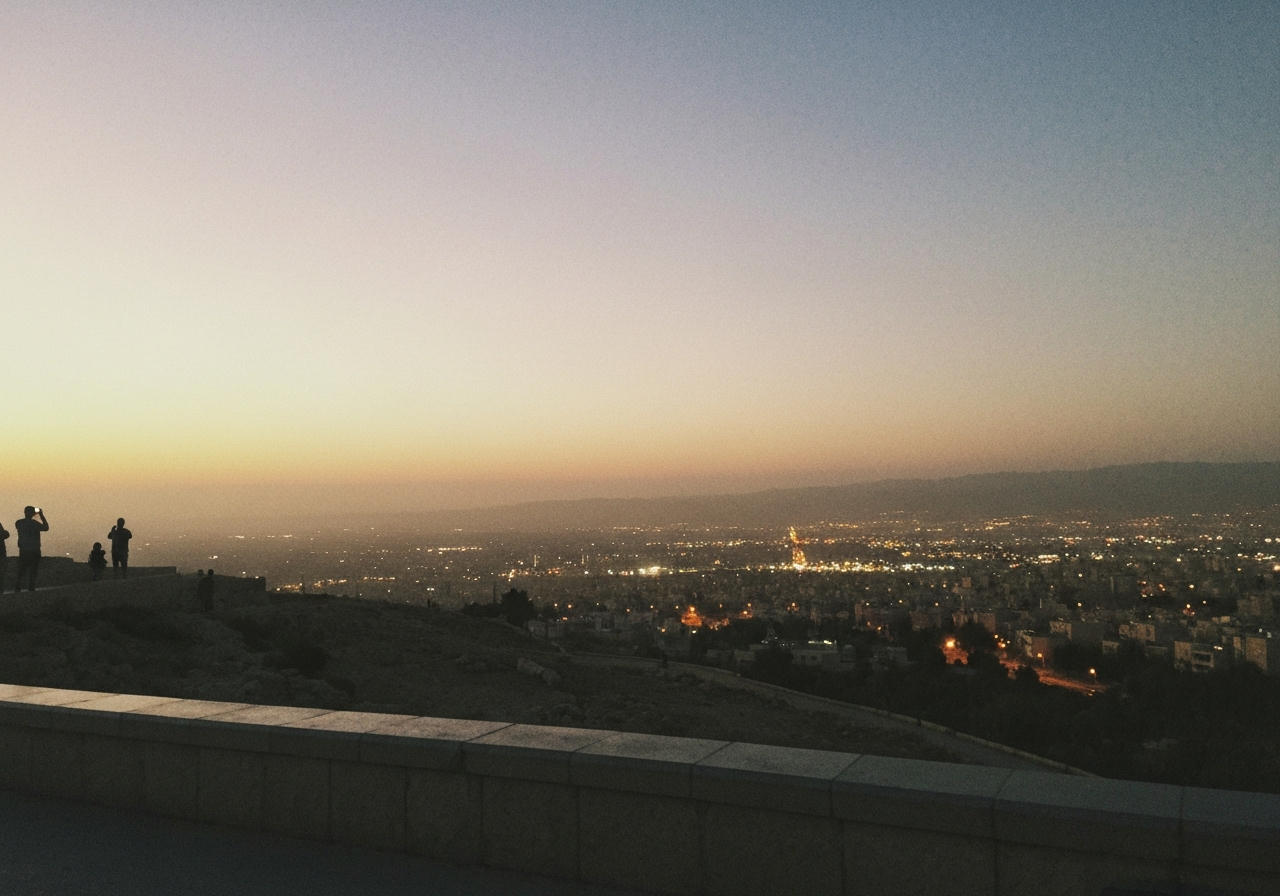
After dinner, I walked some more. Found myself at a viewpoint overlooking the city, where a few other people were taking photos of the sunset. The light was different from Petra's rose-red glow - more golden, diffused through urban haze. I took a few photos but they felt obligatory, like I was checking a box rather than capturing something I actually wanted to remember.
Back at the hotel by 21:30, I tried to sleep but gave up around 02:00. My body is confused - too many days of Petra's rhythm, of waking with the dawn and watching light move across stone. Now I'm in a place where the rhythm is different, constant, unrelenting.
I've been looking at my notebook, at the list of things I wanted to do here. The Citadel, the Roman amphitheater, King Hussein Park with its trees. The Jordan Museum to understand more context for what I saw in Petra. All of it feels suddenly urgent, like I need to accomplish it quickly and move on. That restlessness is back, stronger now. Two hundred days in one location - what was I thinking? Even for Petra, even for something as extraordinary as those carved doorways and quiet rooms, that's too long. I've lost my momentum.
The truth is, I'm feeling the pressure of time in a way I haven't before. One hundred and seventy-three days left. My flight to Chamonix leaves on October 7th - that's booked, that's fixed, that's happening whether I'm ready or not. And between now and then, I need to figure out how to move through this part of the world in a way that makes sense. My December booking to Aqaba doesn't fit anymore - I'll be heading north toward Europe, not south toward the Red Sea. I need to cancel it, rebook something that actually follows a logical route.
My IT brain, as I've come to think of it, is screaming about inefficiency. About the days I've spent sitting still when I should have been moving. About the distance I need to cover and the time I have left to cover it. But another part of me - the part that sat in those quiet rooms and watched light change on ancient stone - knows that the stillness mattered. That I learned something there that I needed to learn.
I just don't know yet what that something was.
Outside my window, Amman continues its night routine. A call to prayer echoes from somewhere - I'd forgotten about that sound, hadn't heard it in Petra's tourist bubble. It's beautiful in its way, haunting, a reminder that I'm in a place with rhythms I don't fully understand.
I should try to sleep again. Tomorrow - today, really - I'll start exploring properly. The Citadel opens at 08:00, and I'll be there when it does. That at least is something I can control, something familiar. Show up early, have the place to myself for a few minutes before the crowds arrive, feel that brief moment of ownership that comes with being first.
But for now, I'm just sitting here, watching the city, feeling displaced in a way that's both uncomfortable and oddly appropriate. I came here to move, to shake off Petra's hold on me, to remember that I'm on a journey with an endpoint. Mission accomplished, I suppose. I feel thoroughly shaken.
The question is what I do with that feeling. Where I go from here, both literally and figuratively. Amman is a waypoint, a place to reorganize and reorient. Four days, maybe five, and then onward. North toward Europe, toward that October deadline, toward whatever comes next.
One hundred and seventy-three days to figure it out.
The sky is starting to lighten - barely, just a hint of gray creeping into the black. Soon it will be morning, officially, and I can stop pretending I'm going to sleep. I'll make coffee, review my notes, plan my day with the kind of detailed efficiency that makes me feel in control even when I'm not.
But first, I'm going to sit here a little longer and watch Amman wake up. It seems like the thing to do, the way to mark this transition from one place to another, from stillness to movement, from ancient stone to modern concrete.
From whatever I was in Petra to whatever I'm becoming here.