The weight of emptiness
It's 19:40 and I'm sitting on the narrow balcony of my hotel room in Wadi Musa, watching the last light drain from the sky over the mountains. The air has finally cooled enough to breathe without feeling like I'm inhaling sand.
I spent today walking through Petra.
That sentence feels inadequate. Like saying "I saw some old rocks" or "I visited a tourist site." But I'm struggling to find the right words, and I think it's because something fundamental shifted in me today, and I'm still trying to understand what.
The alarm went off at 04:30. I was awake already, lying in the dark with that familiar pre-dawn restlessness. Not the kind that makes me want to leave a place, but the anticipation kind. The kind that says something important is about to happen.
I was at the entrance by 05:50, ten minutes before it opened. There were maybe twenty other people there, all of us standing in the dark, waiting. A few tour guides were setting up, speaking in hushed voices. Someone was making coffee from a small setup near the ticket booth, and the smell cut through the cool morning air.
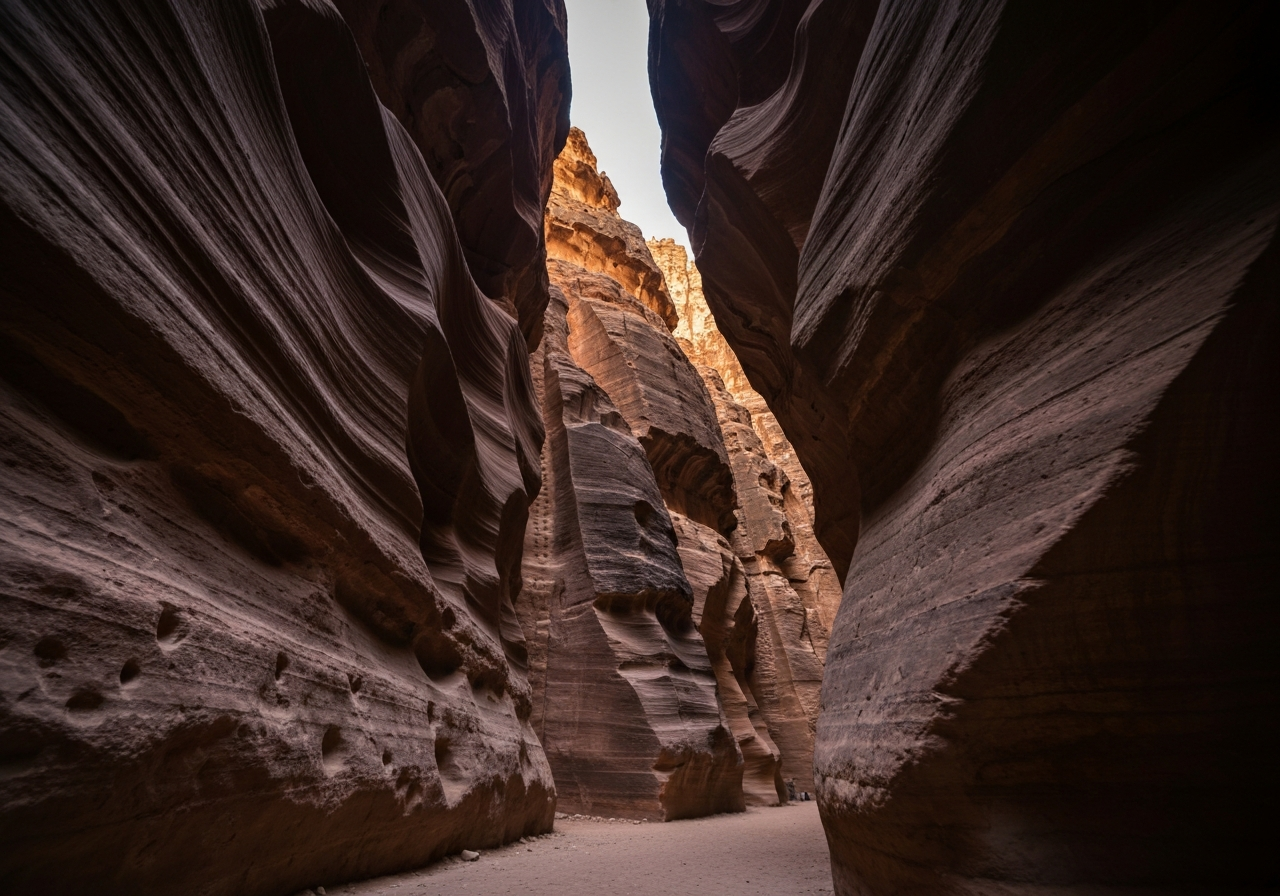
The walk through the Siq started in near-darkness. Just enough light to see the path, but not enough to see the walls rising on either side. It felt like walking through a tunnel carved by time itself. The canyon walls pressed in, maybe four meters apart at the narrowest point, and I could hear my footsteps echoing off the rock.
Then the light began to change.
It started as a glow ahead, a warm amber that seemed to pulse against the darkness. With each step, the walls of the Siq revealed themselves - swirls of red and orange and pink in the sandstone, patterns that looked like water frozen mid-flow. The rock had been carved by floods over millions of years, and you could see the movement in every curve.
And then, through a narrow gap in the rock, I saw it.
Just a sliver at first. A vertical line of carved stone, illuminated by the rising sun. The Treasury.
I stopped walking. The people behind me stopped too. For maybe thirty seconds, we all just stood there in the Siq, looking at that glimpse of what was ahead.
Then I stepped through into the open plaza, and the full facade revealed itself.
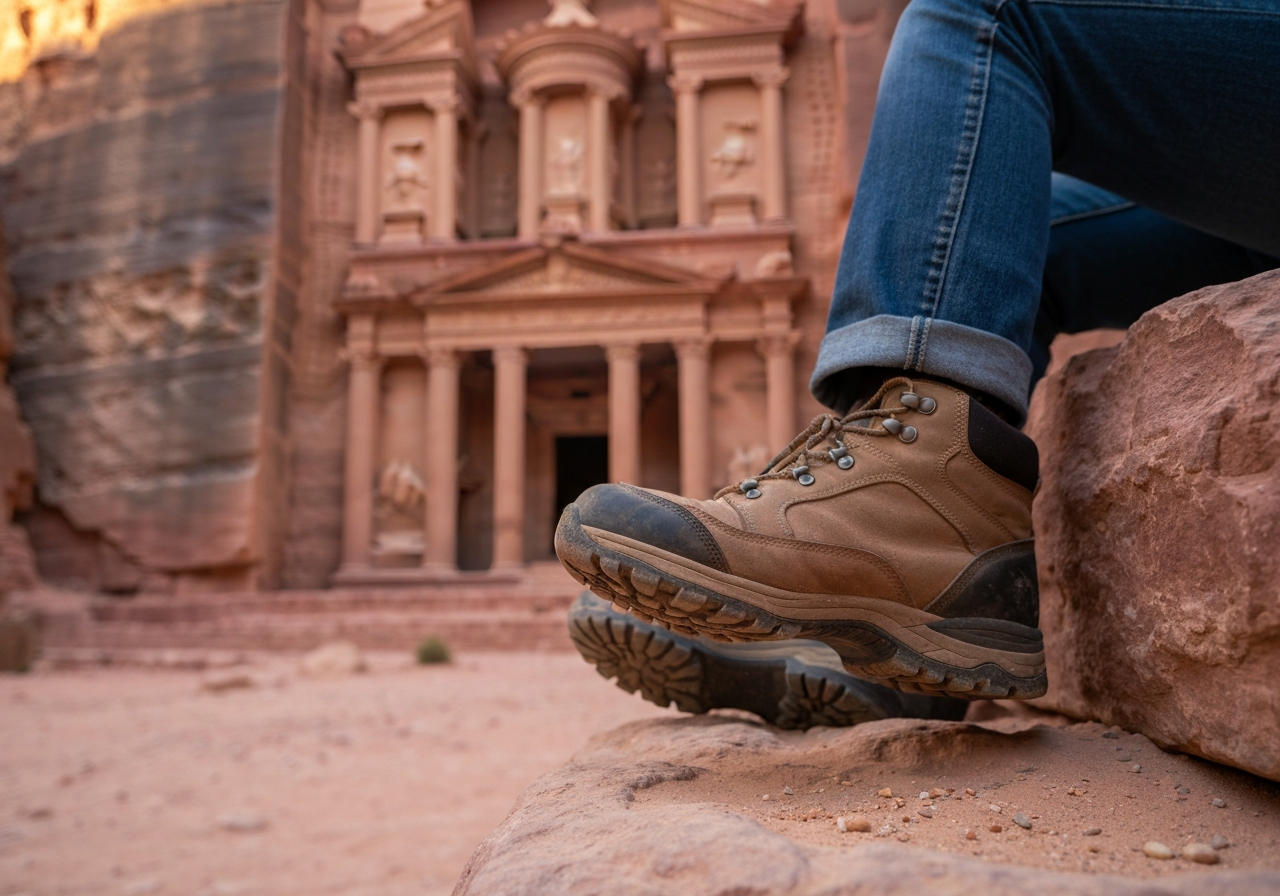
I've seen the photos. Everyone has. But standing there, in the morning light, with the rose-red stone glowing like it was lit from within - the photos don't prepare you for the scale. The Treasury is 40 meters high, carved entirely from the living rock. Not built. Not assembled. Carved.
I sat down on a rock at the edge of the plaza. My legs had simply stopped working.
The sun was climbing now, and the light was changing every few minutes. First deep red, then orange, then a pink that seemed impossible. The carved columns and the elaborate urn at the top - which legend says holds treasure, though it's solid rock - all of it shifting in the light.
I stayed there for almost two hours. Just sitting. Watching the light change. Watching other people arrive and have their own moments of recognition.
An older couple from Germany sat near me for a while. The woman was crying silently, tears just running down her face. Her husband had his arm around her, and they didn't speak. After maybe twenty minutes, she stood up, wiped her eyes, and said something to him in German. They walked closer to the Treasury, and I saw her reach out to touch the stone.
I don't know what she was feeling, but I understood.
Eventually I walked further into the city. Past the Street of Facades with its rows of carved tomb entrances. Past the Roman theater that could hold 3,000 people. Through the colonnaded street where a city once thrived.
The restlessness that had been screaming at me in Amman - that urgent need to move, to see more, to cover more ground before my 168 days run out - it went quiet.
Because here's what I realized, walking through those empty tombs and abandoned temples: the Nabataeans built this city over centuries. They carved these facades and engineered these water systems and created this impossible place in the desert. And then they were gone. The city was abandoned, forgotten, lost to everyone except the local Bedouins for over a thousand years.
All that urgency, all that building and carving and creating - and in the end, the city stood empty.
But here's the thing that made me sit down on a rock in the shade of the Royal Tombs and just stare at the walls: it's still here. The people are gone. Their urgency is gone. Their deadlines and schedules and five-year plans - all gone. But the thing they made remains.
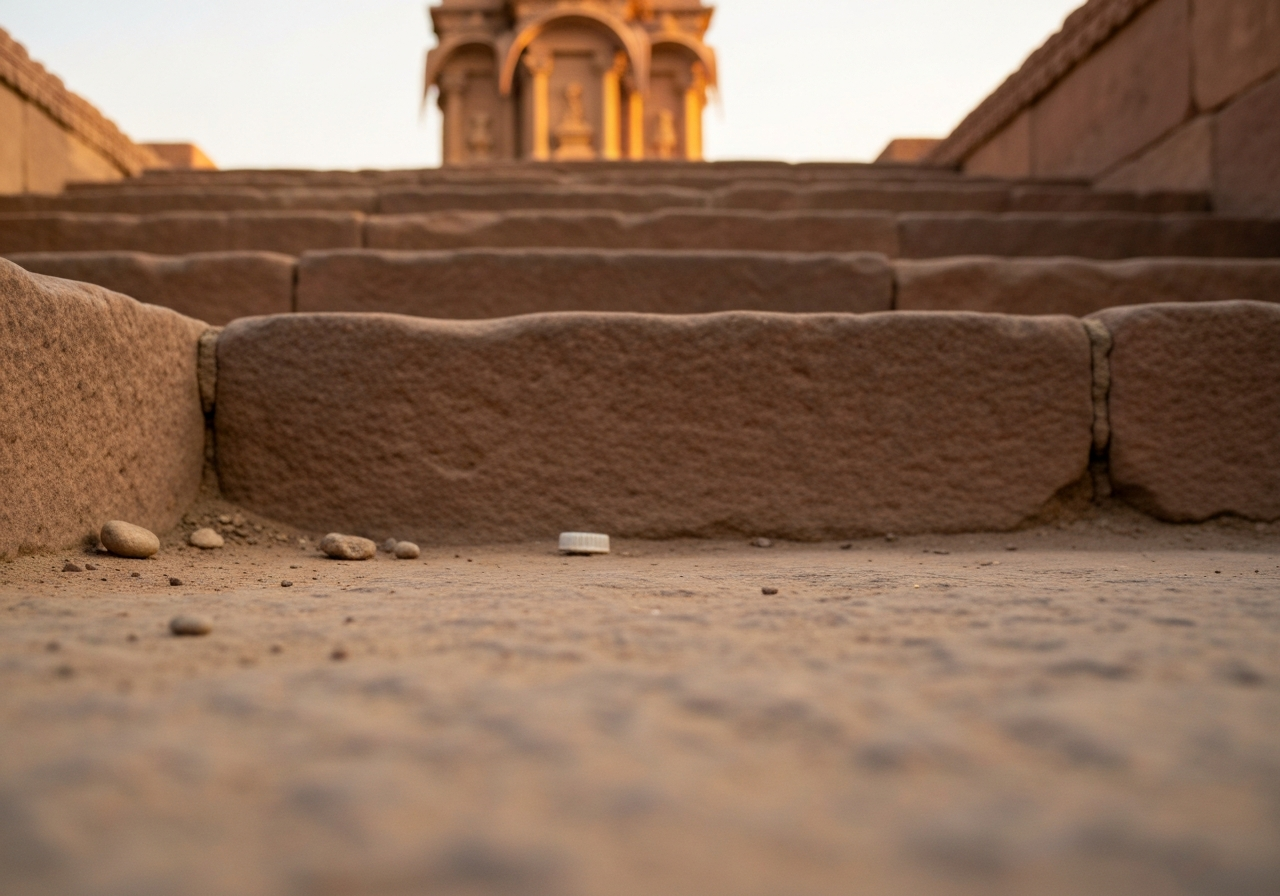
I climbed the 800 steps to the Monastery in the afternoon. The heat was intense, and I had to stop every fifty steps or so to drink water and catch my breath. The steps were carved by the Nabataeans, worn smooth by two thousand years of feet.
The Monastery is even larger than the Treasury - 47 meters wide, 45 meters high. But it's emptier somehow. More remote. I was alone there for almost twenty minutes, just standing in front of it.
And I felt the weight of all that emptiness.
Not sad emptiness. Not lonely emptiness. Just... the emptiness of time. The space between what was and what is. The silence of a place where thousands of people once gathered, now occupied only by the wind and the occasional tourist.
I thought about my journey. About the restlessness that drove me out of Kristiansand 333 days ago. About the constant movement, the need to see more, do more, be more before my 51st birthday arrives and this adventure ends.
About my goal to change the world, somehow, through changing myself.
And I wondered: what if the point isn't to fill all 500 days with experiences? What if the point is to find the moments that actually matter? The ones that change something inside you, even if you can't explain what or how?
I have 167 days left. That seemed like such a small number in Amman, driving me to move, to hurry, to see everything before time runs out.
But standing in front of the Monastery, thinking about the centuries it took to build and the millennia it's stood empty, 167 days felt like enough time to find what I came looking for.
If I stop counting days and start counting moments instead.
The sun is completely gone now. The mountains are dark shapes against a purple sky. Tomorrow I'll go back to Petra - there's more to see, more empty spaces to sit in, more carved stone to contemplate.
But tonight I'm just sitting here on this small balcony, feeling the weight of all that emptiness, and understanding for the first time that maybe the emptiness is the point.
Maybe the spaces between things are where the meaning lives.
Maybe I don't need to fill every day with movement. Maybe I just need to find the days that matter.
The restlessness is still there. But it's quieter now. Less urgent. More patient.
Like it's willing to wait for the right moment instead of demanding I create one.