The space between endings and beginnings
It's 10:00 and I'm sitting in the hotel lobby with my backpack already by my feet, watching the morning light filter through the windows onto the tiled floor. My bus to the south doesn't leave until 13:21, but I've already checked out. Three hours to fill in a city I've already said goodbye to.
The receptionist offered to hold my bag in the storage room, but I declined. There's something about keeping it with me that feels right - like I'm already in transit even though I'm still here.
I ordered coffee from the restaurant, and Mohammed brought it over with a knowing smile. "Today is the day," he said, not as a question. He didn't sit down this time, just gave a small nod before heading back to the kitchen. We'd already had our conversation yesterday. This morning is just the follow-through.
The lobby is quiet except for the sound of someone checking in at the desk. A family - Dutch, from the sound of it - asking about tours to Jerash. The father is taking notes on his phone while his daughter, maybe eight years old, is spinning slowly in place, watching her skirt flare out. Her mother keeps a gentle hand on her shoulder, redirecting the spinning energy.
I remember being that ready to move, that full of kinetic anticipation. Now my restlessness sits differently - less about the physical movement and more about what comes next. Petra has been a destination in my mind for months, one of those places that feels weighted with significance before you even arrive.
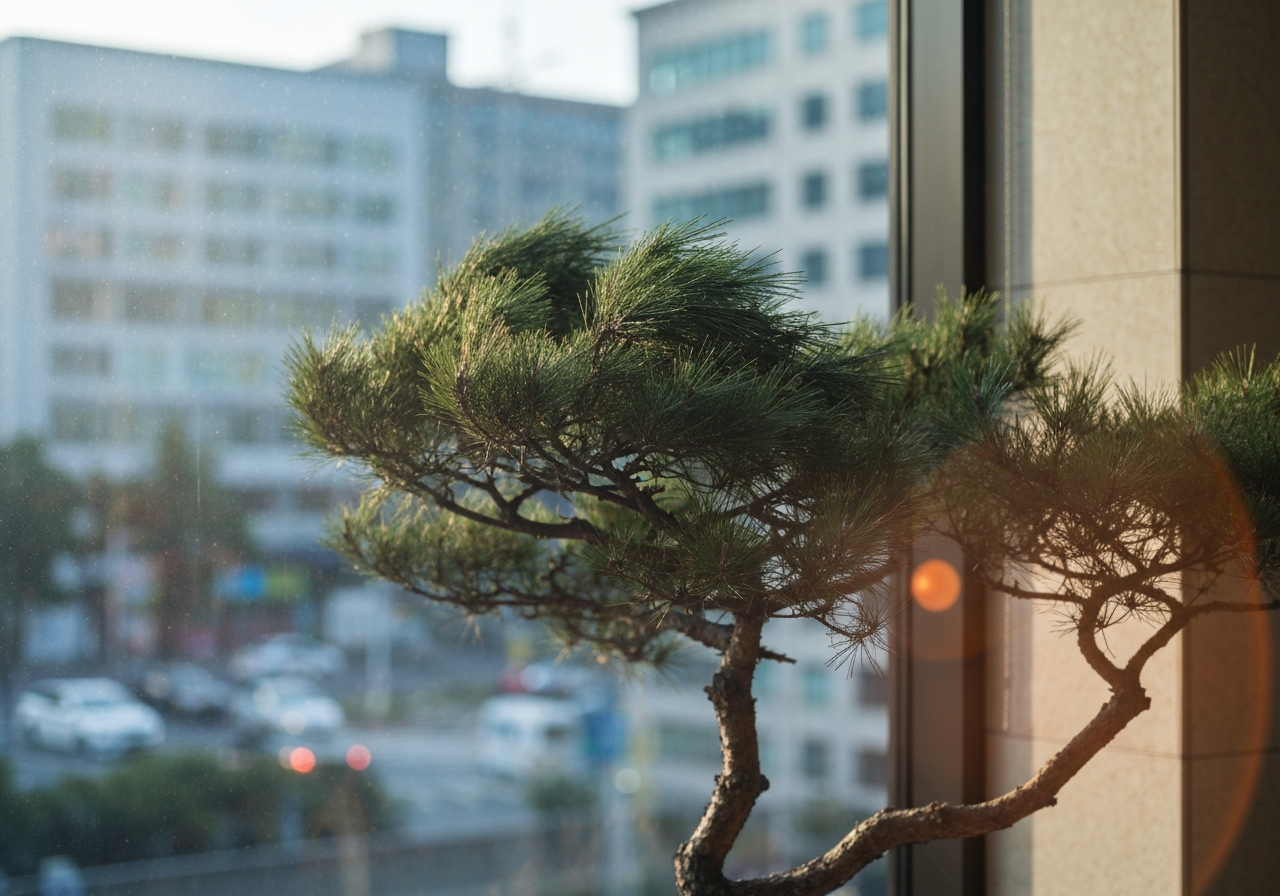
There's a tree outside the lobby window - some kind of pine, I think, though I'm not certain of the species. Its branches move slightly in the breeze, and I find myself watching it the way I've watched trees throughout this entire journey. Patient witnesses to everything passing by.
I've been in Amman for twelve days. That's well beyond my usual rhythm, and I can feel the pull of that deadline - 156 days remaining, and I still haven't seen most of the world. But these twelve days weren't wasted. The museum gallery during the alert. Mohammed's quiet wisdom about continuing to live. The grandmother in the park teaching her granddaughter the clapping game. The way this city just keeps going, absorbing whatever comes and moving forward.
Maybe that's what I needed to see before heading to Petra - a place where people have learned to live with interruption, to build lives around uncertainty. The stones there have stood for 2,000 years. The people here have stood for just as long, in their own way.
The Dutch girl has stopped spinning and is now pressing her face against the lobby window, looking out at the street. Her father is still taking notes. Her mother has moved to stand beside her, pointing at something outside I can't see from here.
I check my phone: 10:07. Three hours and fourteen minutes until the bus.
I could walk around the neighborhood one more time. I could find another café and sit there instead of here. But there's something about this liminal space that feels appropriate - already checked out but not yet departed, between one place and the next, still in Amman but mentally already on that bus heading south through the landscape toward Wadi Musa.
The receptionist is explaining something to the Dutch family about departure times for Jerash tours. The father nods, makes another note. The daughter has moved away from the window and is now examining the decorative tiles on the wall near the elevator, tracing the geometric patterns with her finger.
I take another sip of coffee. It's good - not as strong as I'd make it at home, but that's been true everywhere. I've stopped comparing, mostly. Or at least I've stopped expecting anywhere else to be Norway.
My backpack sits at my feet, containing everything I've carried for 344 days. It's lighter than when I started - I've shed things along the way, left items in donation boxes in Cairo and Istanbul, shipped a few things home from Amsterdam that I realized I'd never use. What remains is what matters, or at least what I haven't yet figured out I don't need.
Through the window, I can see people walking past on the street. A man in a business suit checking his watch. Two women with shopping bags, laughing about something. A teenage boy on a bicycle, weaving between pedestrians with practiced ease. Life continuing.
That's what struck me most about Amman - not the Roman ruins or the citadel or even the museum artifacts, though those were remarkable. It was the way life just continues. The alerts happen, and people make tea and wait them out, and then they go back to their days. The grandmother teaches the clapping game. Mohammed brings coffee. The trees in the park keep growing.
Petra will be different. Ancient, carved, deliberately permanent. A city built to last forever, even though the people who built it are long gone. I'm curious how that will feel after twelve days in a place that's all about the present tense.
The Dutch family is heading toward the elevator now, the daughter still looking back at the tiles. The father has his phone in one hand and a room key in the other. The mother is carrying a small backpack, probably with snacks and water for their daughter.
I wonder what they'll remember about Jordan when they get home. Probably Jerash, if they go. Maybe Petra, if they make it there. Possibly this moment in the lobby, though probably not - it's too ordinary, too in-between to stick in memory.
But these in-between moments are what I'm learning to notice. The spaces between destinations. The hours of waiting. The coffee in lobbies. The trees outside windows. The way Mohammed brought my cup without asking what I wanted because he already knew.
It's 10:23 now. Two hours and fifty-eight minutes until the bus.
I should probably eat something before the journey. The restaurant is still serving breakfast, and the ride to Wadi Musa is three hours. But I'm not particularly hungry, just aware that I should be practical.
My phone buzzes - a message from my mother asking if I'm still in Amman or if I've moved on. I reply: "Leaving today. Heading to Petra." She responds almost immediately: "Be careful. Drink water." The same things she's said before every trip I've taken since I was a teenager.
I put the phone away and look back at the tree outside the window. It's still moving slightly in the breeze, patient and present. It will be here tomorrow when I'm in Wadi Musa. It will be here next week, next month, next year. Long after my 500 days are done and I'm back in Kristiansand, this tree will still be growing here, witnessing other travelers in other lobbies, waiting for other buses.
There's something comforting about that.
The lobby is quiet again. Just me and my backpack and the receptionist at the desk and the tree outside the window and the coffee going cool in my cup.
156 days remaining. And right now, three hours until the next one begins.