Arriving in Lyon: first impressions of France's gastronomic capital
The train pulled into Lyon Part-Dieu station just before noon today, and I stepped out into what felt like a completely different world from the peaceful lake town I'd left behind just hours earlier. The station buzzed with activity—business travelers in suits rushing past tourists struggling with luggage, announcements echoing overhead in rapid French that I could barely catch.
I arrived with no real plan beyond finding my hotel and perhaps wandering the streets a bit. After three peaceful days in Annecy, I was ready for something different, something more urban. Lyon promised both history and modernity, and most importantly (let's be honest), a culinary reputation that had my stomach growling with anticipation.
Finding my bearings
My hotel is situated near Place Bellecour, which I'm told is one of Europe's largest open squares. After dropping off my luggage, I ventured out to explore the immediate surroundings. The afternoon sun cast a warm glow over the city, making the walk particularly pleasant. 18°C feels practically tropical compared to what awaits me back home in a few months.
I quickly discovered that Lyon is built around two rivers—the Rhône and the Saône—which divide the city into distinct districts. My wanderings took me first to the Presqu'île, the peninsula between the rivers where much of the shopping and dining is concentrated.
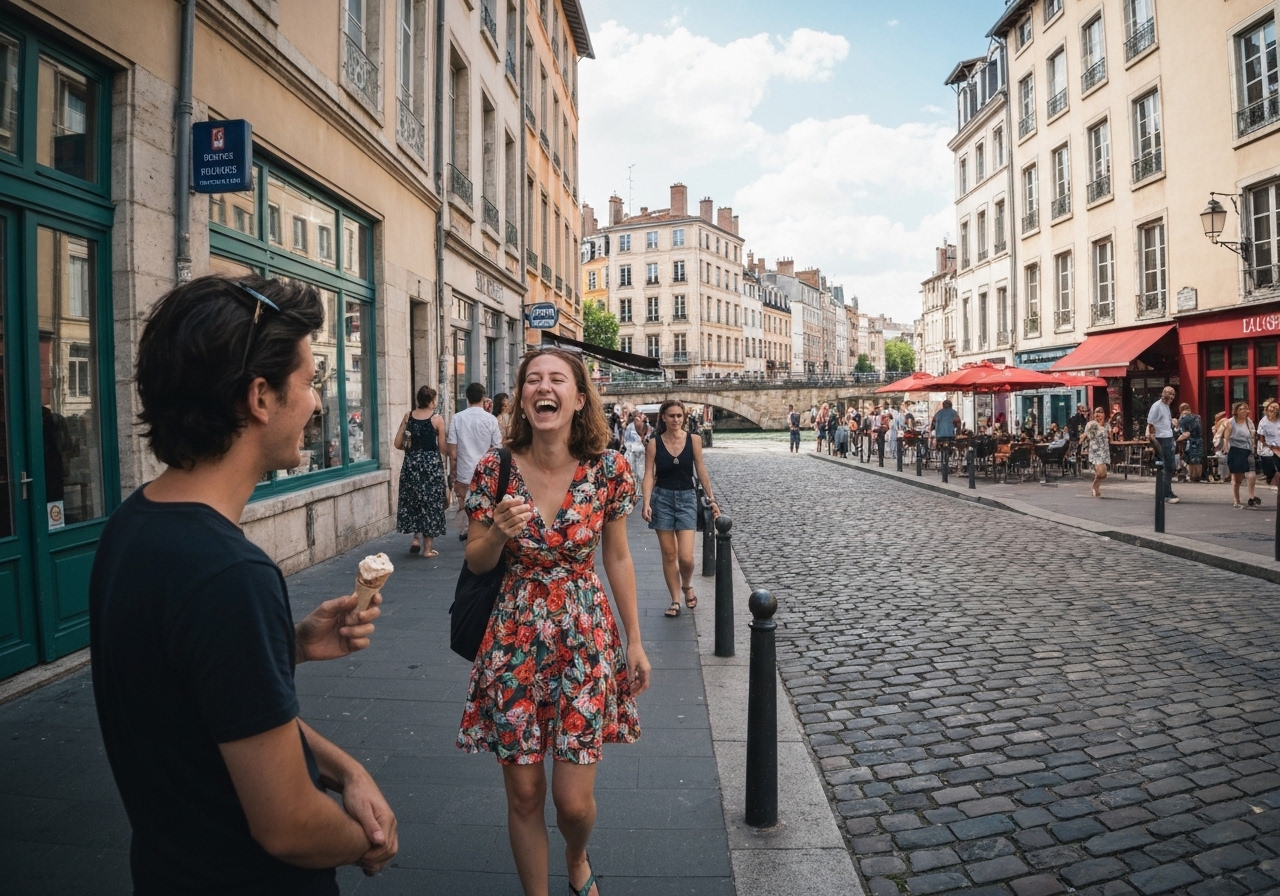
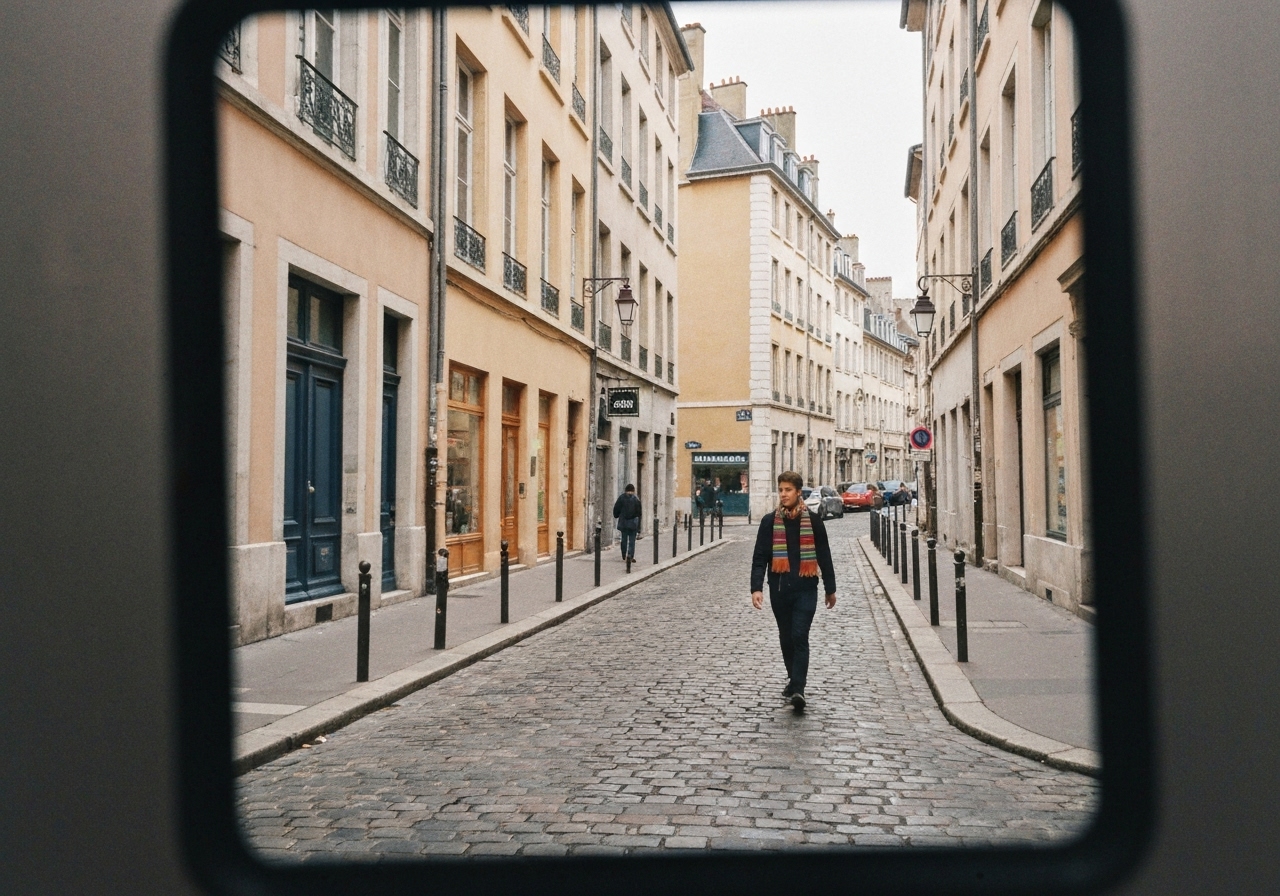
One thing that struck me immediately was the architecture—beautiful Haussmanian buildings with their cream-colored facades and wrought iron balconies lining wide boulevards. But unlike Paris, Lyon feels less intimidating, more approachable somehow.
Traboules and hidden passages
I'd read about Lyon's famous traboules—secret passageways that weave through buildings and connect streets—and was determined to find some. Armed with a rudimentary map from the hotel receptionist, I crossed one of the bridges to Vieux Lyon (the old town) and began my search.
The first traboule I found was nearly invisible from the street—just an unassuming doorway that I almost walked past. I pushed it open (feeling slightly like I was trespassing) and discovered a narrow corridor leading to a beautiful renaissance courtyard with a spiral staircase. These passages were originally built for silk workers to transport their goods protected from rain, but during WWII, they served as escape routes for the resistance.
I spent nearly two hours getting deliberately lost in the labyrinth of these passages, emerging onto streets I hadn't intended to visit, which is precisely the point of exploration, isn't it?
The climb to Fourvière
From Vieux Lyon, I noticed the imposing Basilica of Notre-Dame de Fourvière perched high above the city. The guidebook mentioned panoramic views, so naturally, I had to investigate.
There's a funicular that goes up the hill, but the weather was so pleasant that I opted to climb the stairs instead. About halfway up, I was seriously questioning this decision as my calves burned in protest. But the view from the top—oh, it was worth every step.
From the basilica's terrace, Lyon sprawled out before me—a sea of terracotta rooftops, the two rivers snaking through the city, and mountains hazily visible in the distance. I could identify the major landmarks I'd read about: Place Bellecour, the distinctive pencil-shaped tower of Part-Dieu, and the vast expanse of the city stretching in all directions.
The basilica itself is a stunning piece of architecture—all white stone and ornate decoration. The interior is covered in mosaics that glitter in the light filtering through stained glass windows. I spent nearly an hour inside, neck craned upward, absorbing the details.
A first taste of Lyon's cuisine
By mid-afternoon, hunger finally caught up with me. Lyon's reputation as France's gastronomic capital created high expectations, and I was eager to begin my culinary exploration. I'd read about the traditional Lyonnais restaurants called 'bouchons'—small, family-owned establishments serving hearty local cuisine.
I found a modest-looking place in Vieux Lyon with red-and-white checkered tablecloths and a menu written on a chalkboard. The waiter seemed pleased when I attempted to order in French, though he quickly switched to English after my pronunciation of 'quenelle' made him wince slightly.
My late lunch consisted of a pike quenelle (a type of fish dumpling in a creamy sauce), followed by a cervelle de canut—a soft cheese seasoned with herbs and shallots. Simple food, but prepared with such care that each bite felt like a revelation.
As I ate, I noticed a news ticker on a small TV in the corner mentioning something about an EDF strike scheduled to begin tonight and continue through tomorrow. The waiter assured me it wouldn't affect tourists much—just some potential power reduction, but nothing like the transportation strikes that can paralyze cities.
Evening reflections
Now I'm back at my hotel, feet aching pleasantly from a day of exploration. The sun is beginning to set, casting long shadows across Place Bellecour. From my window, I can see people strolling, enjoying the mild evening.
Lyon already feels different from Annecy—more vibrant, more diverse, more... alive somehow. Where Annecy was picture-perfect and serene, Lyon pulses with energy. The transition from lakeside tranquility to urban exploration marks another shift in my journey, another rhythm to adapt to.
Tomorrow I plan to visit the Croix-Rousse district to learn about Lyon's silk-working history, and perhaps the Museum of Fine Arts if time permits. But for now, I'm content to sit by the window, watching the city transition from day to night, feeling grateful for another day of discovery on this long journey.
43 days down, 457 to go. The world remains vast and wonderful.