First morning in Haifa: new beginnings after fifty
The bus from Jerusalem pulled into Haifa just before sunset yesterday. After checking into my hotel—a modest but clean place with a small balcony overlooking the lower city—I was too tired to do much exploring. I unpacked, had a quick dinner at a nearby restaurant, and fell asleep before 9pm.
This morning, I woke at 6:30, drawn from sleep by the soft glow of Mediterranean sunrise filtering through my curtains. My hotel is halfway up Mount Carmel, giving me a beautiful view of the city cascading down toward the sea. The light here is different—softer, more golden than Jerusalem's stark brightness.
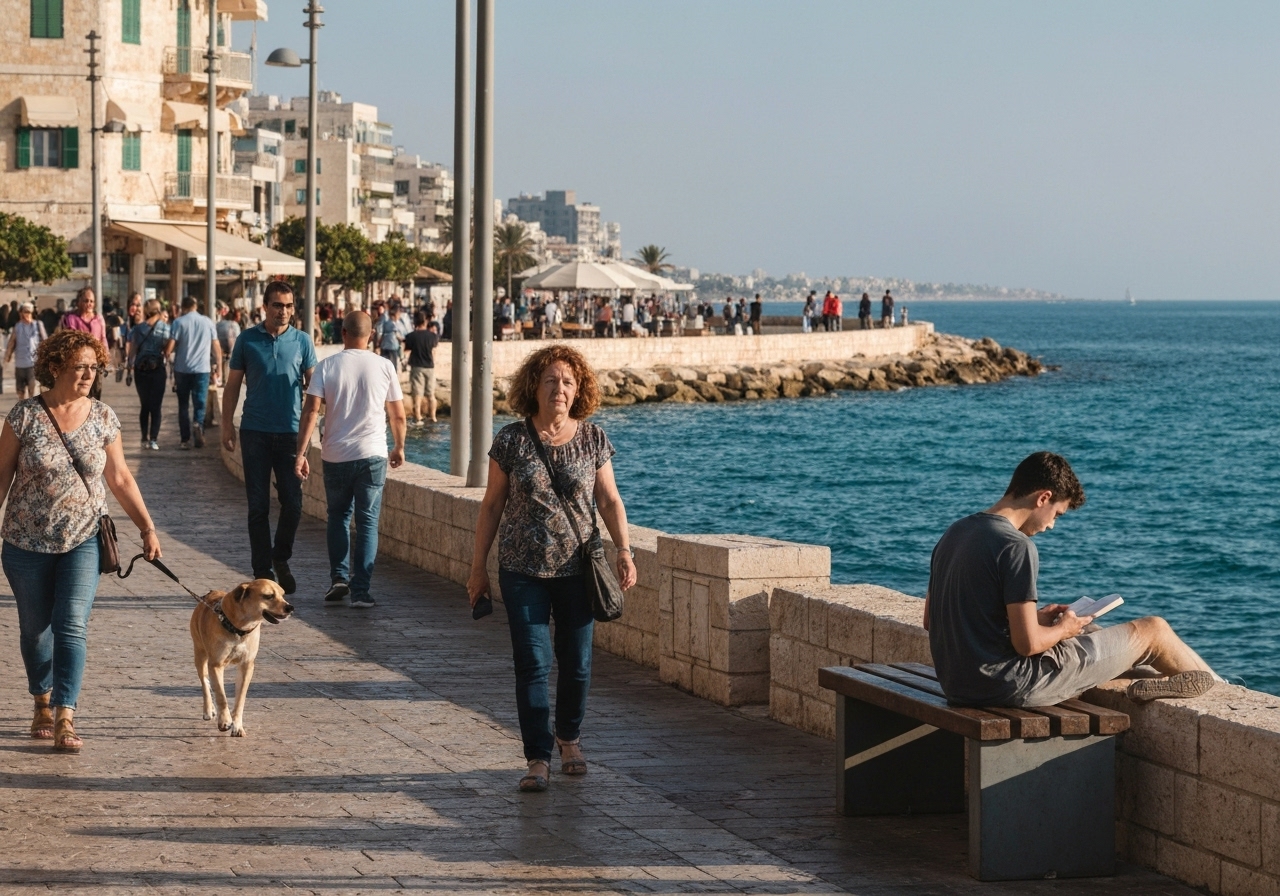
I spent the first hour on my balcony, sipping the surprisingly decent hotel room coffee and watching the city wake up. Haifa feels immediately different from Jerusalem. Where Jerusalem pulses with ancient tension and spiritual intensity, Haifa breathes with a relaxed, almost European rhythm. The air carries a hint of salt.
At 8:00, I headed out for breakfast, finding a small café just opening its doors. I was their first customer of the day. The owner, a man in his sixties with salt-and-pepper hair and a ready smile, recommended their shakshuka. It arrived bubbling hot in its pan, eggs perfectly cooked in spiced tomato sauce with a basket of fresh bread for dipping. As I ate, I watched other patrons arrive—what looked like local workers grabbing coffee before their shifts, an elderly couple sharing a newspaper, a young mother with a toddler in tow.
"First time in Haifa?" the owner asked as he refilled my coffee.
"Yes," I replied. "Just arrived yesterday."
"From?"
"Jerusalem. But originally Norway."
He nodded appreciatively. "Very different from both places, you'll see. Haifa is... how to say it... we breathe easier here."
I've noticed that already. The religious and political tensions that seemed to electrify Jerusalem's very air feel more distant here. Not absent—I don't think they're truly absent anywhere in this region—but less immediate.
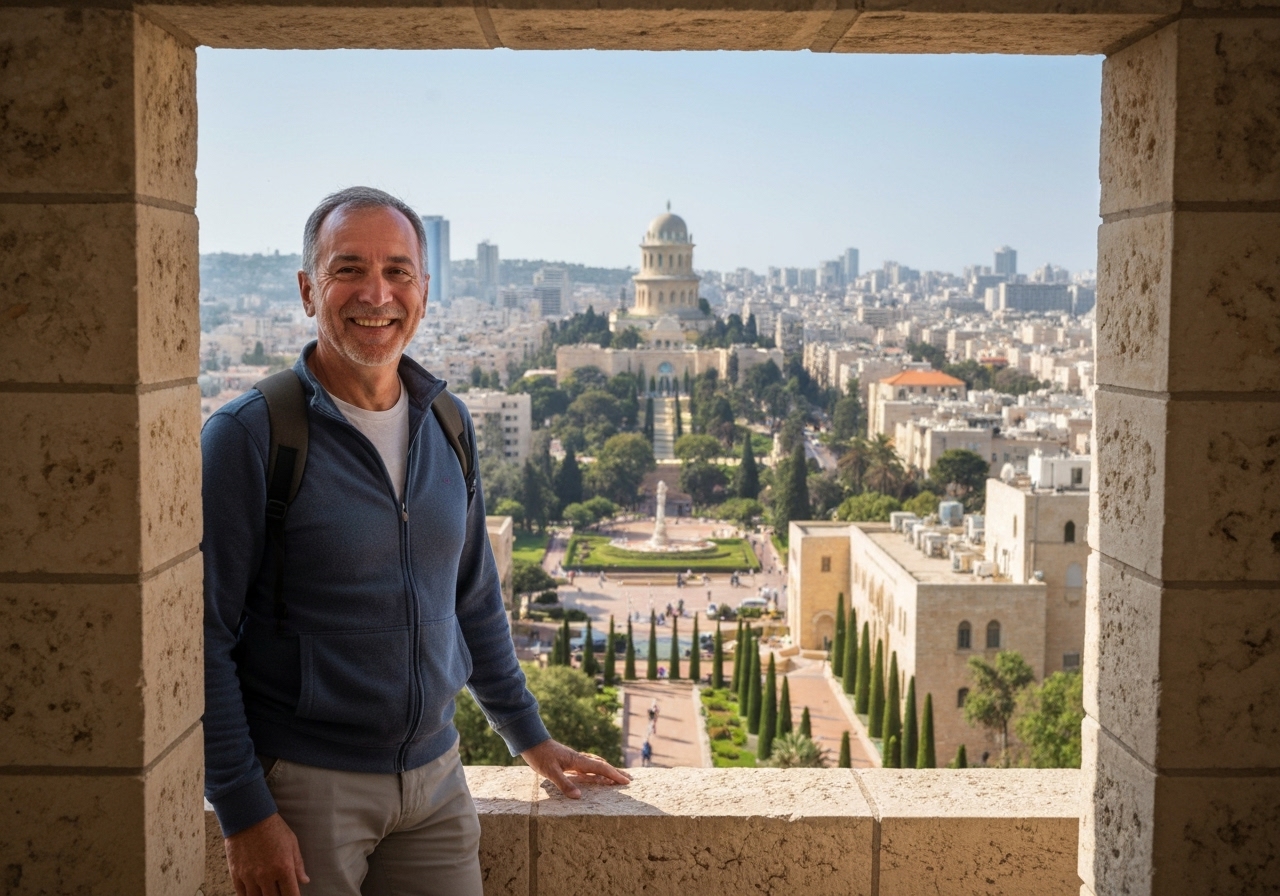
After breakfast, I walked down toward the German Colony, a neighborhood established by German Templars in the 1860s. The restored stone buildings with their red-tiled roofs line Ben Gurion Avenue, creating a straight path that leads the eye directly up to the crown jewel of Haifa: the Bahá'í Gardens.
I stood at the bottom of the terraced gardens, looking up at the golden-domed shrine gleaming in the morning sun. The symmetrical gardens climb the mountainside in eighteen perfectly manicured terraces. I checked the time—just past 9:30. The upper terrace entrance would open at 10:00 for the first tour of the day.
I made my way up the side streets, climbing steadily. Haifa is built on the slopes of Mount Carmel, and walking anywhere means navigating inclines. By the time I reached the upper entrance, my calves were burning pleasantly from the climb.
I was there at 9:50, joining a small gathering of tourists waiting for the gates to open. When they did, we were led inside by a guide who explained the significance of the Bahá'í faith—a religion founded in the 19th century that emphasizes the unity of all religions and humanity. The terraced gardens represent the Bahá'í belief in unity through diversity, with plants from around the world arranged in harmonious patterns.
The view from the top was breathtaking. The Mediterranean stretched endlessly blue before us, the port facilities looking like toys from this height. I could see all the way to Akko on the northern horizon.
"The gardens are designed to create a path from the city to heaven," our guide explained, "representing humanity's spiritual journey."
I couldn't help but think about my own journey—138 days in, 362 to go before I turn 51. Standing there, looking out over the sea that has witnessed civilizations rise and fall, my recent 50th birthday feels both significant and trivial. The gardens, with their perfect symmetry and careful planning, made me reflect on the unplanned nature of my own path.
After the tour, I walked back down through the German Colony, stopping to examine the architecture more closely. Some buildings have been beautifully restored, housing cafés and boutiques, while others show their age in weathered stone and faded paint.
It's just past 10:00 now, and I'm sitting at another café, this one with tables spilling onto the sidewalk. The weather is perfect—17°C and sunny, with a gentle breeze carrying the scent of the sea. I have a fresh orange juice and am plotting my next move. Perhaps the Haifa Museum of Art this afternoon, or maybe the cable car to Stella Maris Monastery.
For now, though, I'm content to sit here, watching the rhythm of this new city unfold around me. After the intensity of Jerusalem and the symbolic weight of turning fifty there, Haifa feels like a fresh page—one I'm eager to fill with new experiences.
Four days here seems about right. Enough time to explore the main sights, but also to find those hidden corners that don't make it into guidebooks. And who knows? Maybe I'll stay longer if the city keeps revealing new layers.
The restlessness that drove me from Jerusalem has settled for now. There's something about the sea air that calms the spirit.