National treasures and unexpected connections
Wednesday, January 28, 2026 - Day 155 of 500 Beirut, Lebanon
The morning light filtered through my hotel room curtains, waking me earlier than I'd planned. After yesterday's spontaneous arrival and exploration of the Corniche, I was eager to dive deeper into Beirut's layers of history and culture. Today's mission: the National Museum of Beirut.
I arrived at the museum at 8:50, only to discover it opens at 9:00. The security guard noticed me waiting and smiled knowingly. "Ten minutes," he said, holding up all ten fingers. I nodded, appreciating his friendliness despite my early arrival. The brief wait gave me time to admire the museum's imposing façade, a beautiful limestone structure built in the 1930s.
When the doors opened precisely at 9:00, I was the first visitor inside. The museum was gloriously empty, allowing me to move at my own pace through the collections. What struck me immediately was how the building itself tells a story of resilience. During Lebanon's civil war, the museum stood directly on the demarcation line dividing the city. The staff had the foresight to protect smaller artifacts by encasing them in concrete, while larger pieces were shielded with sandbags.
The collection spans over 5,000 years of history, from prehistoric times through the Ottoman period. I found myself lingering in front of the Phoenician sarcophagi, intricately carved stone coffins depicting scenes from mythology. The craftsmanship was remarkable, especially considering they date back to the 5th century BCE.
A small bronze figurine of a bull caught my attention – not just for its artistic merit but because the museum guide mentioned it was discovered during infrastructure work for electricity lines, similar to how Qatar is now investing in Lebanon's electricity sector. Just two days ago, they announced a $40 million grant and $360 million for infrastructure projects. It's fascinating how ancient artifacts and modern development intersect in unexpected ways.
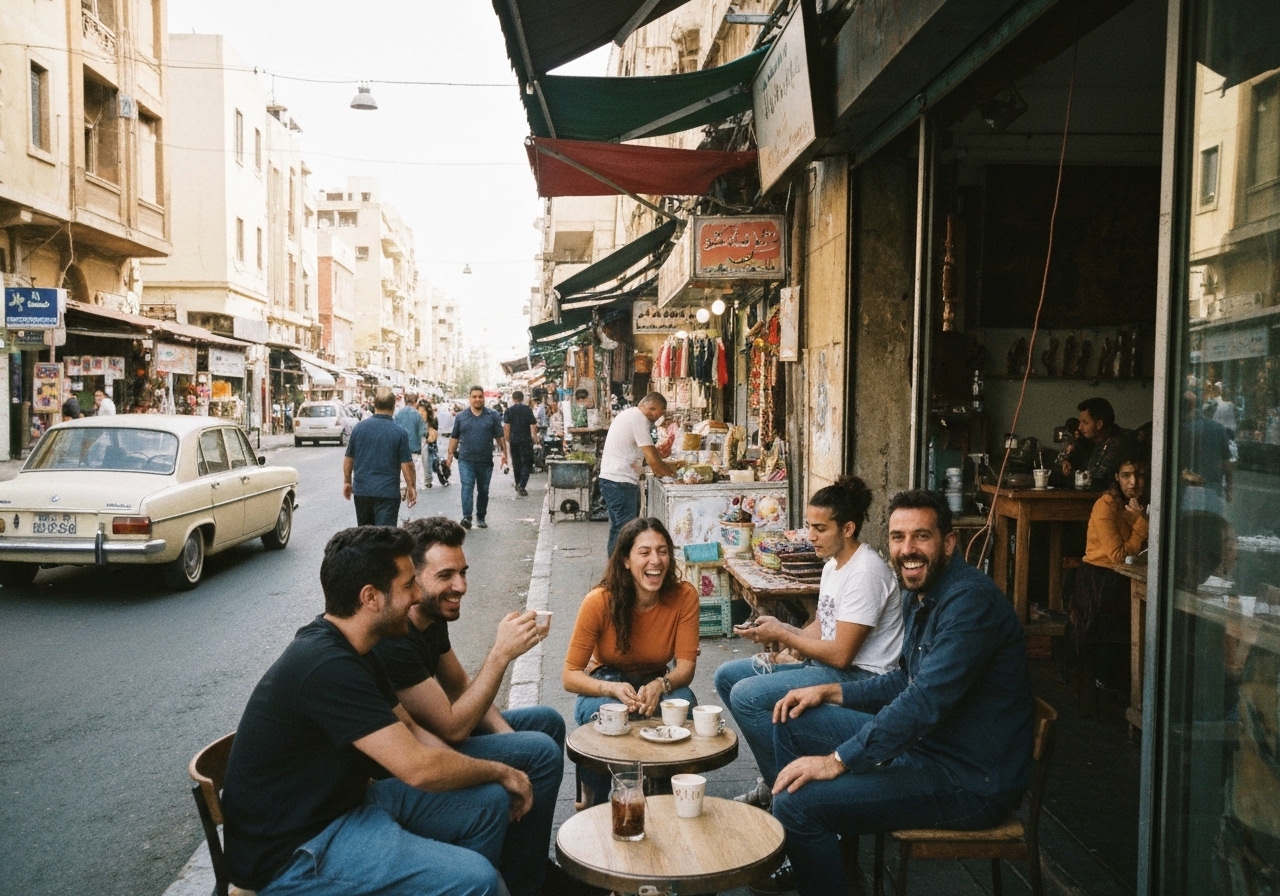
By 11:30, I had thoroughly explored the museum's three floors and decided to find lunch. Following a recommendation from the hotel receptionist, I walked to a small restaurant in Gemmayze neighborhood, about 15 minutes away. The menu was entirely in Arabic, so I pointed to what others were eating – which turned out to be manakish, a Lebanese flatbread topped with za'atar and cheese. Simple but delicious.
As I was finishing my meal, the restaurant owner approached my table with a fresh pot of coffee. "You are from Norway?" he asked, surprising me. When I confirmed, he broke into a wide smile and disappeared into the back, returning moments later with a photo. It showed him standing next to a Norwegian cruise ship, where he had worked as a chef for three years in his younger days.
"I learned to make fish soup from Bergen," he said proudly. "Very good with cream."
For the next half hour, we chatted about Norway, Lebanon, and the strange coincidences of travel. He refused to let me pay for my coffee, insisting it was "for memories of Norway." These unexpected connections are what make travel meaningful – finding threads that link disparate places and people across thousands of kilometers.
The clouds that have been gathering all morning are growing darker now. The forecast mentions rain coming this afternoon, so I'm back at my hotel to plan the rest of my day. I'm considering visiting the Mohammad Al-Amin Mosque if the weather clears, or perhaps exploring some of the art galleries in the Mar Mikhael district.
One thing that's been on my mind is seeing the famous cedars of Lebanon. The Lebanese cedar appears on their flag and has been a symbol of the country for thousands of years. From what I've researched, the best cedar forests are in the mountains about two hours from Beirut. I might try to arrange a day trip tomorrow if the weather cooperates.
For now, I'm enjoying this quiet moment of reflection. After 155 days on the road, I've learned to appreciate these pauses between experiences. The journey isn't just about what you see, but also about how you process and internalize those sights. Beirut, with its complex history and warm people, is giving me plenty to contemplate.
The forecast shows rain starting around 3:00 PM, so I'll wrap up here and venture out again before the showers begin. The clouds are making the temperature feel cooler than yesterday's 18°C – I might need that extra layer I almost left behind in Cairo.
345 days to go. Sometimes that feels like forever, and sometimes it feels like hardly any time at all.