Ancient giants: standing among Baalbek's temples
I arrived at Baalbek at 9:50 this morning, ten minutes before the official opening time of the archaeological site. The driver who brought me from Beirut seemed amused as I insisted on leaving early enough to arrive with time to spare, but I prefer waiting outside a closed gate to rushing through traffic.
The air was crisp and cold as I waited, just 4°C according to my phone. I pulled my jacket tighter and watched my breath form small clouds in the winter air. Lebanon in January isn't exactly warm, especially here in the Bekaa Valley where the elevation is higher than coastal Beirut. The weather forecast promised a high of only 10°C today, but at least the morning's breeze had subsided.
First impressions
When the gates opened, I was the first visitor to enter. The site was eerily quiet, with just a few staff members moving about. I'd read about Baalbek being one of Lebanon's premier tourist destinations, but the recent conflicts have clearly affected visitor numbers dramatically. The security situation has kept many travelers away, which is understandable but sad for both the local economy and for people missing this extraordinary place.
But the emptiness offered a rare opportunity: experiencing these ancient wonders in solitude, something that would be impossible under normal circumstances.
Walking among giants
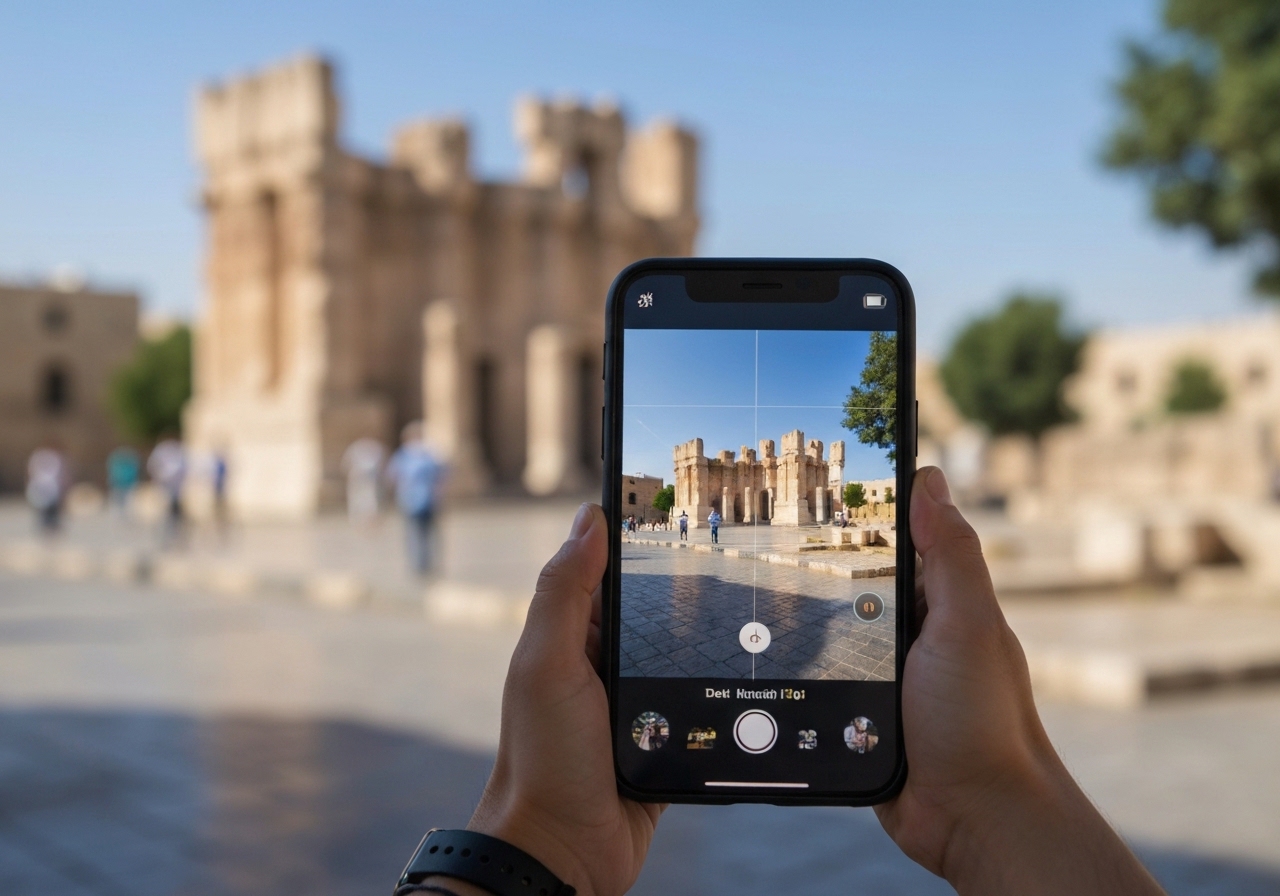
Nothing quite prepares you for the scale of Baalbek. I've visited Roman ruins across Europe and North Africa, but these temples dwarf nearly everything I've seen before. The Temple of Jupiter's remaining six columns stand 22 meters high, each composed of three massive stone drums that somehow have remained standing for two millennia despite earthquakes, wars, and the simple passage of time.
The most impressive feature might be the Stone of the Pregnant Woman in the nearby quarry – a monolith weighing over 1,000 tons that was cut but never moved from its position. Standing beside it makes you feel insignificant, both physically and temporally. How did ancient builders even contemplate moving such masses without modern machinery? Some questions from antiquity remain unanswered.
The Temple of Bacchus
The most intact structure at Baalbek is the Temple of Bacchus, and it's breathtaking. While the Temple of Jupiter might have been more impressive when complete, today Bacchus offers the more complete experience. Its walls and many columns still stand, allowing you to truly appreciate what these buildings looked like in their prime.
I spent nearly an hour just sitting on a fallen column inside the temple, trying to absorb the atmosphere. The ornate stone carvings above – grapes and vines appropriate for the god of wine – have weathered but remain distinct. The massive doorway, framed by an intricate lintel, stands as one of the largest and most beautifully decorated entrances I've ever seen in ancient architecture.
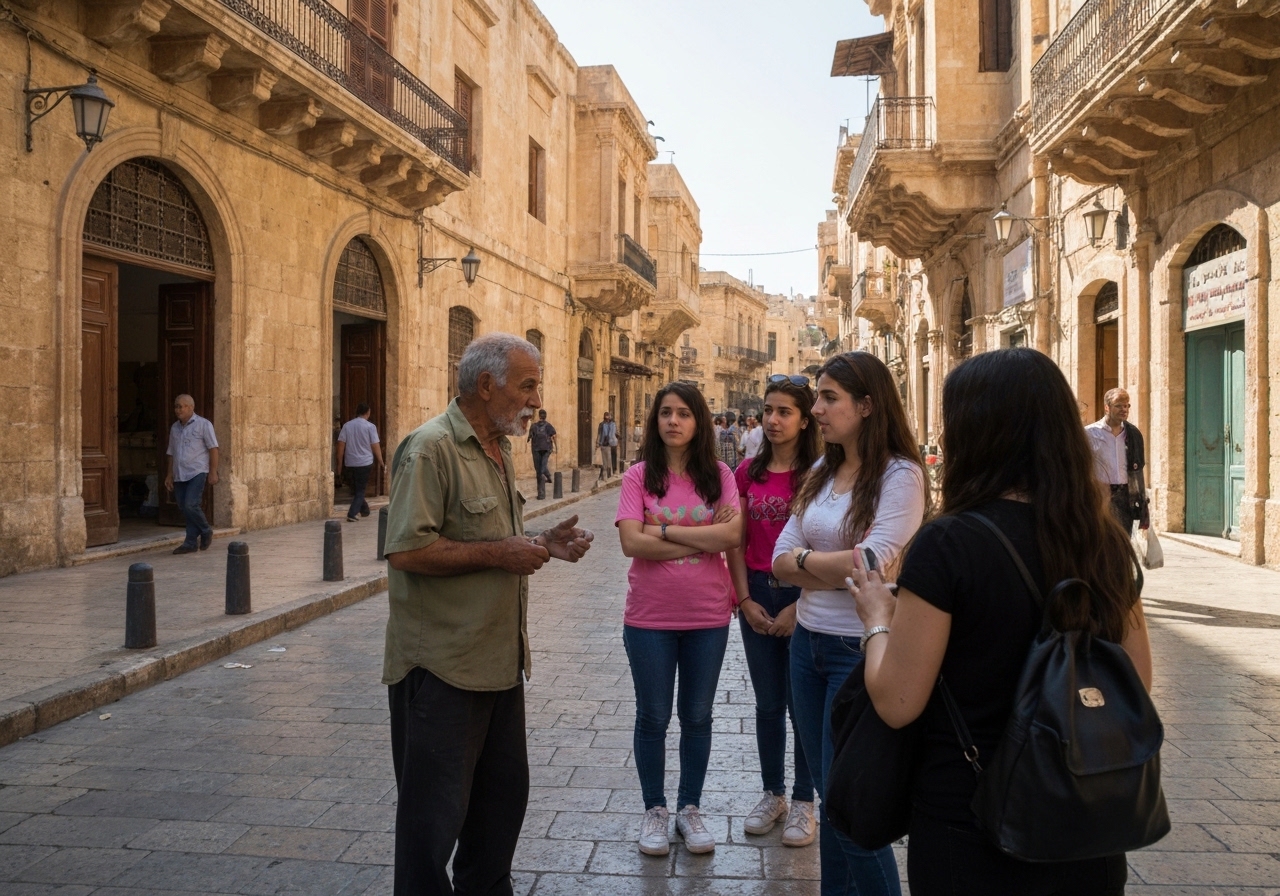
A security guard approached while I was sitting there. I tensed briefly, wondering if I'd broken some rule, but he just wanted to make sure I was appreciating the carvings above. He pointed out details I had missed – faces hidden in the stonework, symbols that carried meaning to the Romans. His English was limited and my Arabic non-existent, but architecture and history created a common language.
Reflections on time
Sitting alone among these ancient stones, I couldn't help reflecting on the concept of time. These buildings have witnessed the rise and fall of empires, religions, and entire civilizations. They've stood through wars ancient and modern, including the recent conflicts that have kept tourists away.
The columns that remain standing are a testament to human ingenuity and ambition. The ones that have fallen remind us that even the greatest works eventually succumb to time. There's something both humbling and inspiring about that reality.
My journey so far has been 156 days – just over five months. That feels simultaneously like a long time and barely a moment compared to these stones that have stood for two millennia. In 344 days, I'll be home again, turning 51. What will I have learned by then? What transformations will have occurred?
A quiet lunch
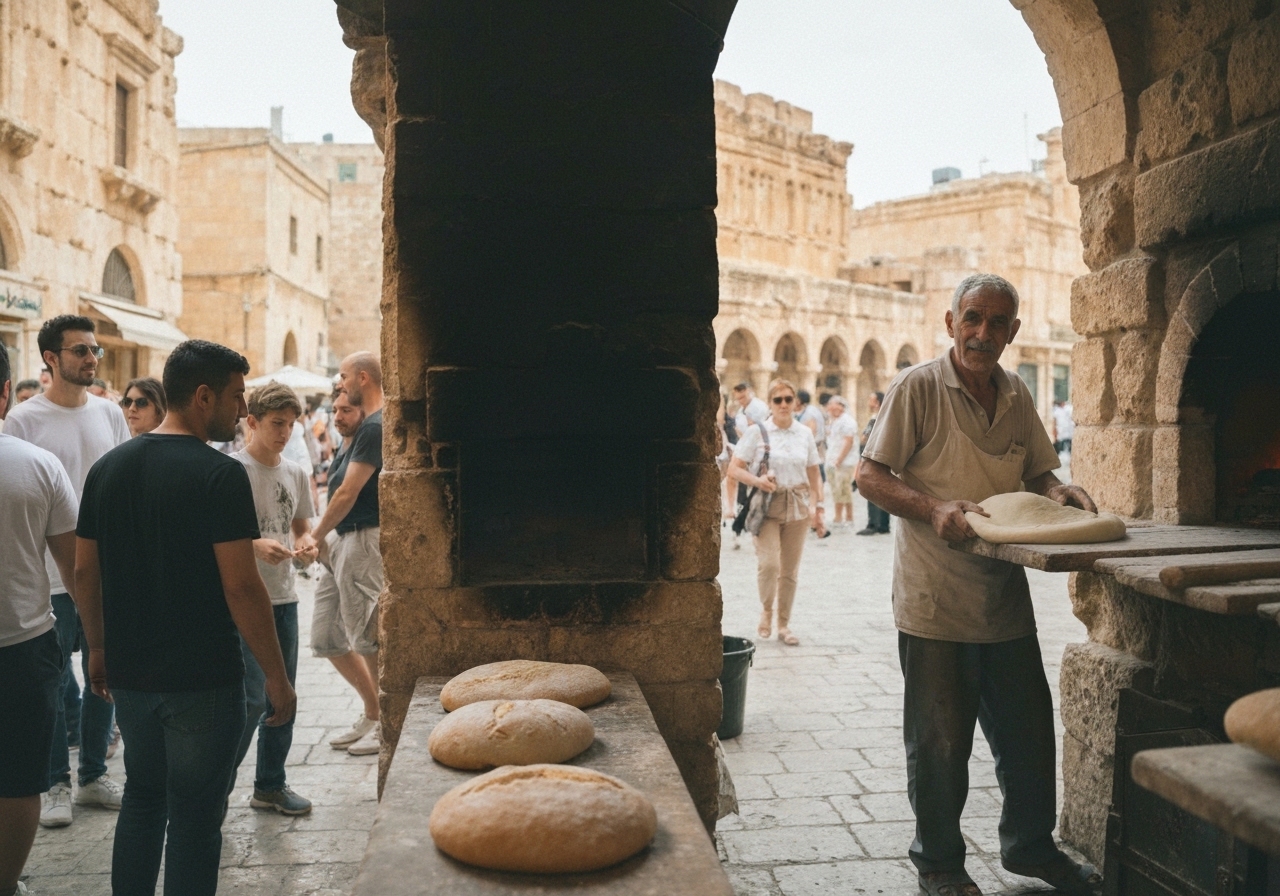
Around noon, I left the archaeological site to find some food. The town of Baalbek itself seems subdued, with fewer restaurants open than I expected. I found a small place where an older man served me a simple but delicious lunch of kibbeh (spiced meat and bulgur wheat croquettes) and tabbouleh. He seemed surprised to see a tourist, especially one traveling alone.
"Norwegian?" he asked when I told him where I was from. "Very cold there, yes?"
I laughed and gestured to the chilly air outside. "Today, not much difference."
He smiled at that. "But we have this," he said, bringing out a small glass of thick Arabic coffee infused with cardamom. The warmth and aroma were exactly what I needed.
I'm back at the ruins now, sitting in a quiet corner with my notebook. There's something special about these ancient places when you have them mostly to yourself. The weather is still cool but the sun occasionally breaks through the clouds, casting dramatic shadows across the massive stone blocks.
In about an hour, I'll need to meet my driver for the return trip to Beirut. Part of me wishes I could stay longer, perhaps until sunset when the golden light would transform these honey-colored stones. But transportation options are limited, and the security situation means it's wiser to return to Beirut before dark.
Baalbek has been a highlight of Lebanon – perhaps of this entire journey so far. Some places exceed even the highest expectations, and this is definitely one of them. I'll carry these massive temples in my memory long after I've left.
Days remaining: 344