Afternoon at Karnak: where giants built for eternity
The alarm buzzed at 4:30 this morning, and for once I didn't mind. I had arranged a felucca ride for sunrise, and there was no way I was going to be late. By 5:10 I was at the riverside meeting Mahmoud, my captain for the morning, who greeted me with a sleepy smile and a thermos of hot mint tea.
The Nile was perfectly still as we pushed off from shore, the water like black glass reflecting the last few stars. We drifted in near silence, the only sounds being the occasional splash of the oar and distant calls to prayer echoing across the water. As the sky began to lighten, the silhouettes of palm trees appeared on the shoreline, and the first birds began their morning songs.
I've seen many sunrises on this journey, but watching the sun peek over the eastern desert while floating on the Nile—the lifeblood of ancient Egypt—felt particularly meaningful. The light gradually transformed everything, painting the limestone cliffs of the west bank in shades of pink and gold. Mahmoud pointed out various landmarks, speaking in a mixture of English and Arabic, occasionally using his hands when words failed.
"Nile, always changing, always same," he said, gesturing to the water. "Five thousand years, same river."
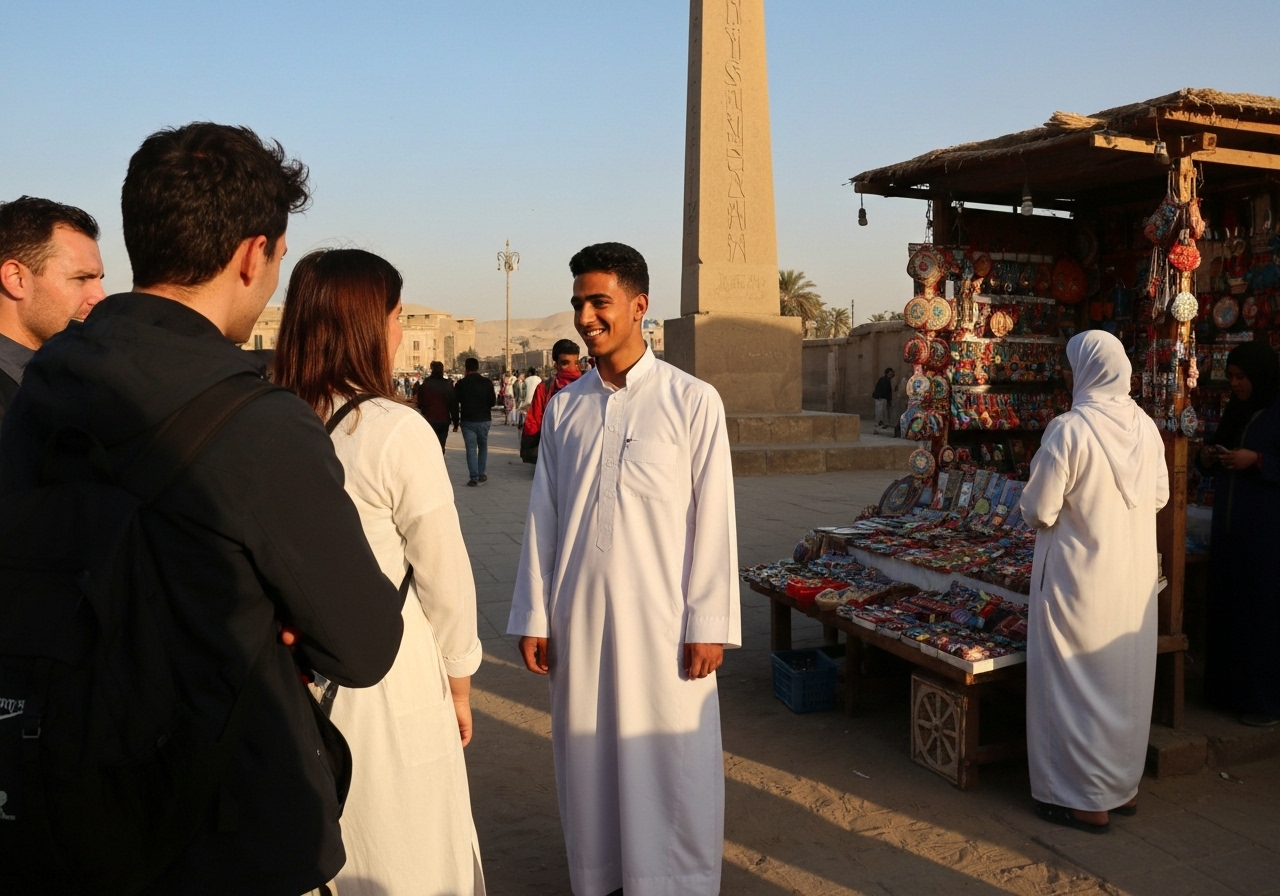
After returning to shore and grabbing a quick breakfast at the hotel, I headed to the Temple of Karnak, arriving just as they opened at 6:00. The morning light was perfect for photography, and I had the place nearly to myself for the first hour.
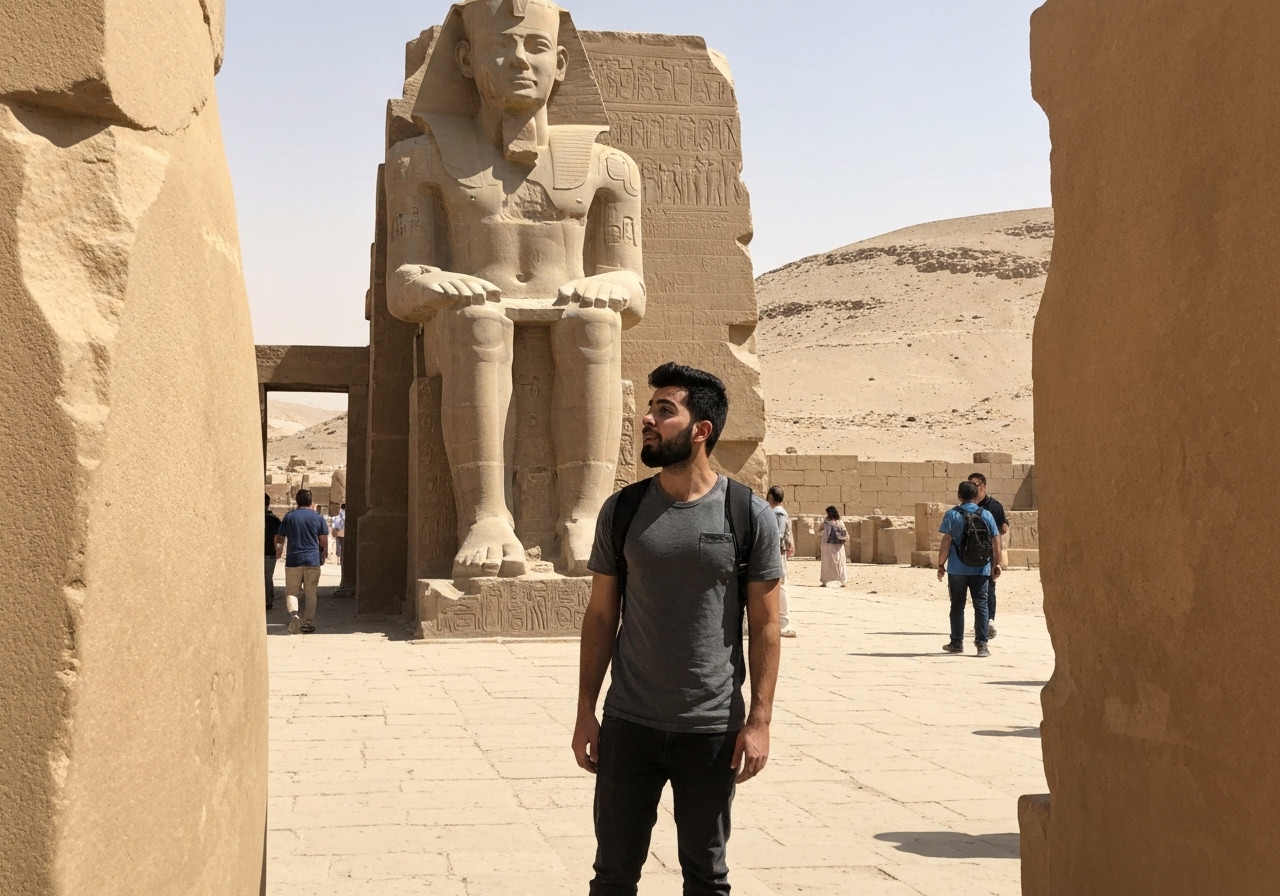
Karnak is overwhelming. It's not just a temple but an entire complex built over 2,000 years by successive pharaohs, each adding their mark to honor the god Amun-Ra. The scale defies comprehension—columns so massive they make you feel like an ant, stone blocks larger than cars, and hieroglyphics that stretch as far as the eye can see.
In the Great Hypostyle Hall, I stood beneath 134 massive columns, each carved and painted with incredible detail. Some are 21 meters tall and 3 meters in diameter. I tried to imagine the engineering challenges, the thousands of workers, the decades of construction—all without modern technology. How many people died building this place? How many lives were devoted to creating something that would outlast them by millennia?
I found a quiet spot in the shade and sat for nearly an hour, just absorbing the atmosphere. A temple cat came by, curling around the base of a column before settling near me, seemingly unimpressed by the architectural marvel surrounding us. I envied its nonchalance.
By midday, the temperature had climbed to a pleasant 22°C, and I decided to explore some of the lesser-visited areas of the complex. In the Temple of Khonsu, I found myself completely alone. The silence was profound, broken only by my footsteps and the occasional distant shout of a tour guide. Standing in a space where people worshipped 3,000 years ago, I felt both insignificant and connected to something eternal.
I spent nearly six hours at Karnak before finally conceding to hunger and fatigue. On my way back to town, I stopped at a small restaurant where I ordered koshari—a delicious mix of rice, lentils, pasta, and spicy tomato sauce topped with crispy onions. The owner seemed pleased with my enthusiasm for the dish and brought me extra crispy onions with a wink.
Now I'm back at my hotel, feet up, reviewing the hundreds of photos I took today. I've deleted at least half already—no photo can really capture the feeling of being dwarfed by those columns or the way the light plays through the ancient stonework.
Tomorrow is the Valley of the Kings, which means another early start. I've arranged a guide and transport for 7:00 am to beat both the heat and the crowds. After seeing what the ancient Egyptians built for their gods, I'm curious to see what they created for their dead pharaohs.
Three days into my time in Luxor, and I'm already dreading having to leave on Sunday. There's something about this place that feels both alien and familiar. Perhaps it's the timelessness of it all—the Nile flowing as it always has, the temples standing as they have for millennia, the rhythm of life continuing despite empires rising and falling.
In the grand scheme of my 500-day journey, four days in Luxor is barely a moment. But I suspect these days will stay with me long after I've moved on to the next destination.
!The Great Hypostyle Hall at Karnak Morning light streaming through the columns of the Great Hypostyle Hall